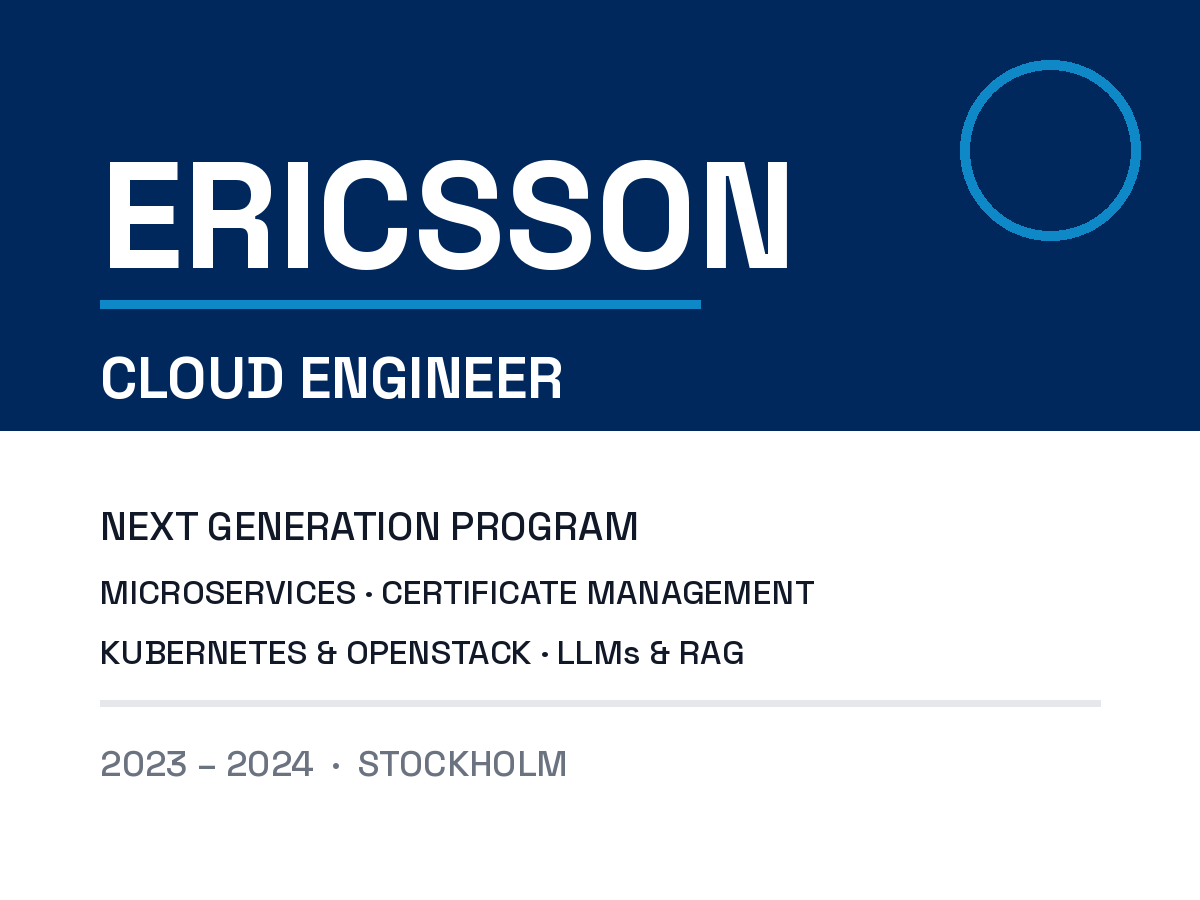
Between 2023 and 2024 I worked as a Cloud Engineer at Ericsson AB in Stockholm — the full-time job that followed my master’s thesis internship at Ericsson Research. I joined through the Next Generation program, Ericsson’s graduate rotational scheme, and over two years I moved from building visualization tools to microservices and certificate infrastructure, and finally to Kubernetes/OpenStack cloud automation and an internal AI assistant with a RAG chain.Entre 2023 y 2024 trabajé como Cloud Engineer en Ericsson AB en Estocolmo — el empleo a tiempo completo tras las prácticas de mi máster en Ericsson Research. Entré por el programa Next Generation, el esquema rotacional de Ericsson, y en dos años pasé de construir herramientas de visualización a microservicios e infraestructura de certificados, y luego a la automatización cloud con Kubernetes/OpenStack y un asistente interno de IA con cadena RAG.
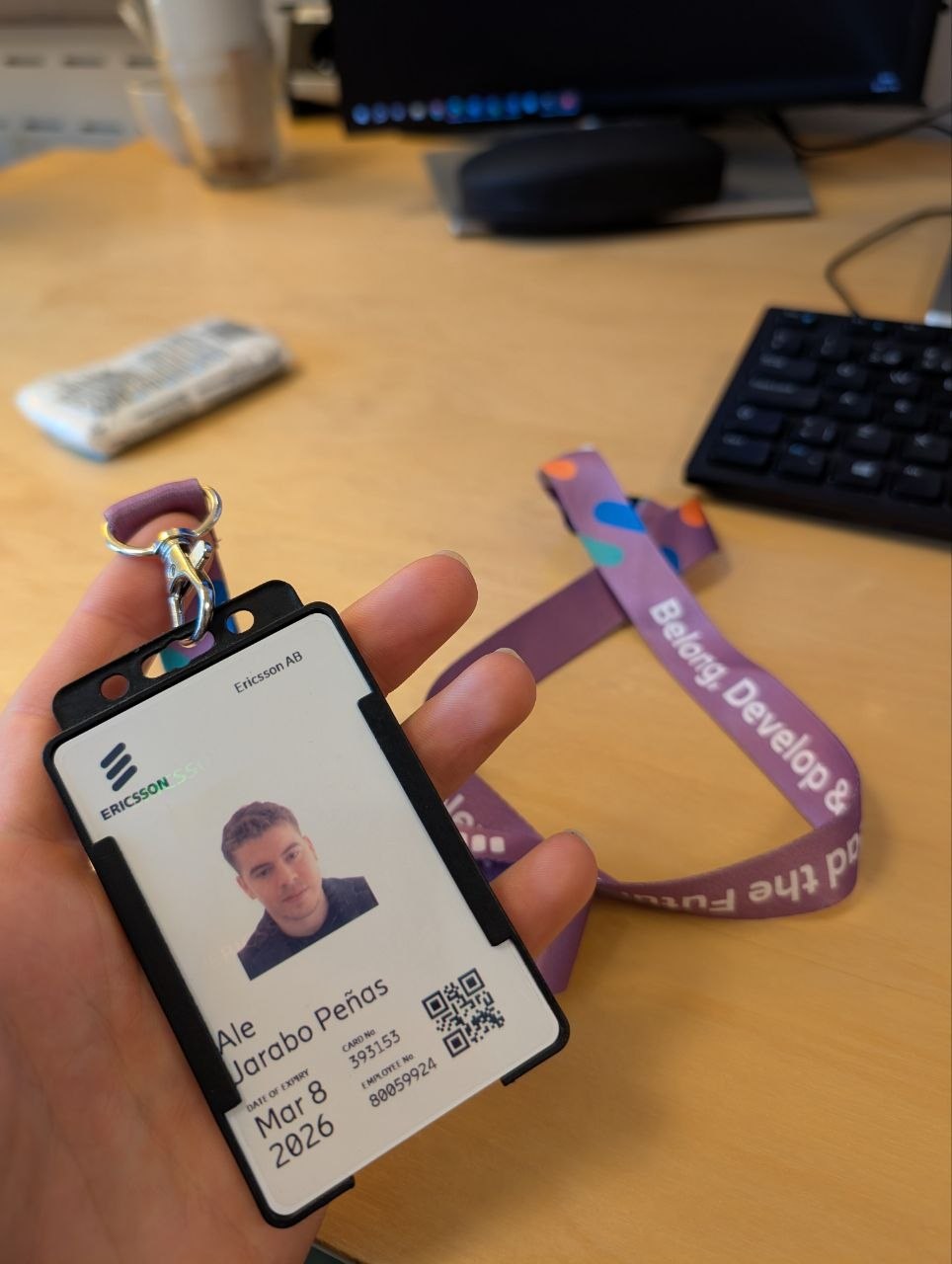
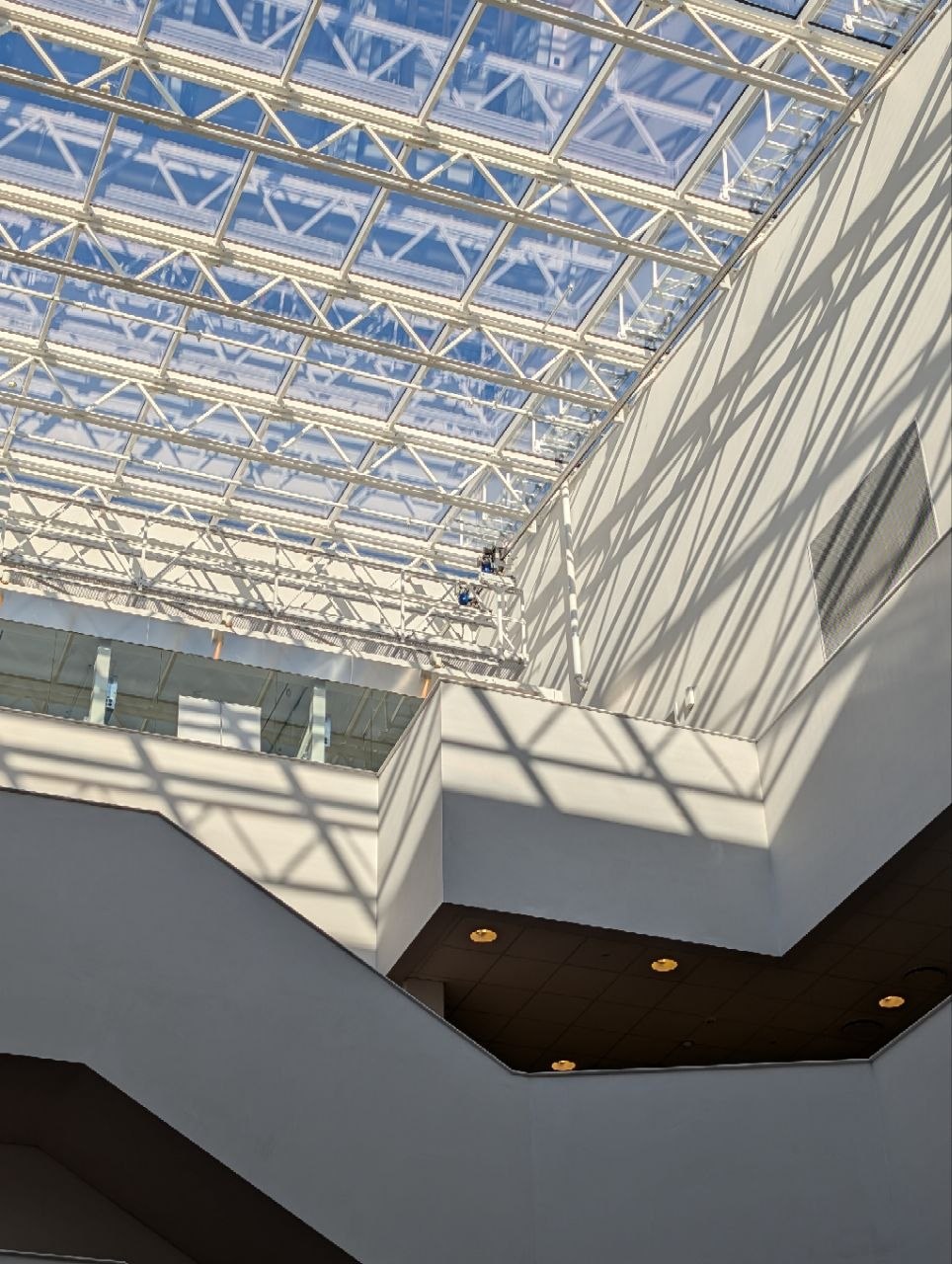
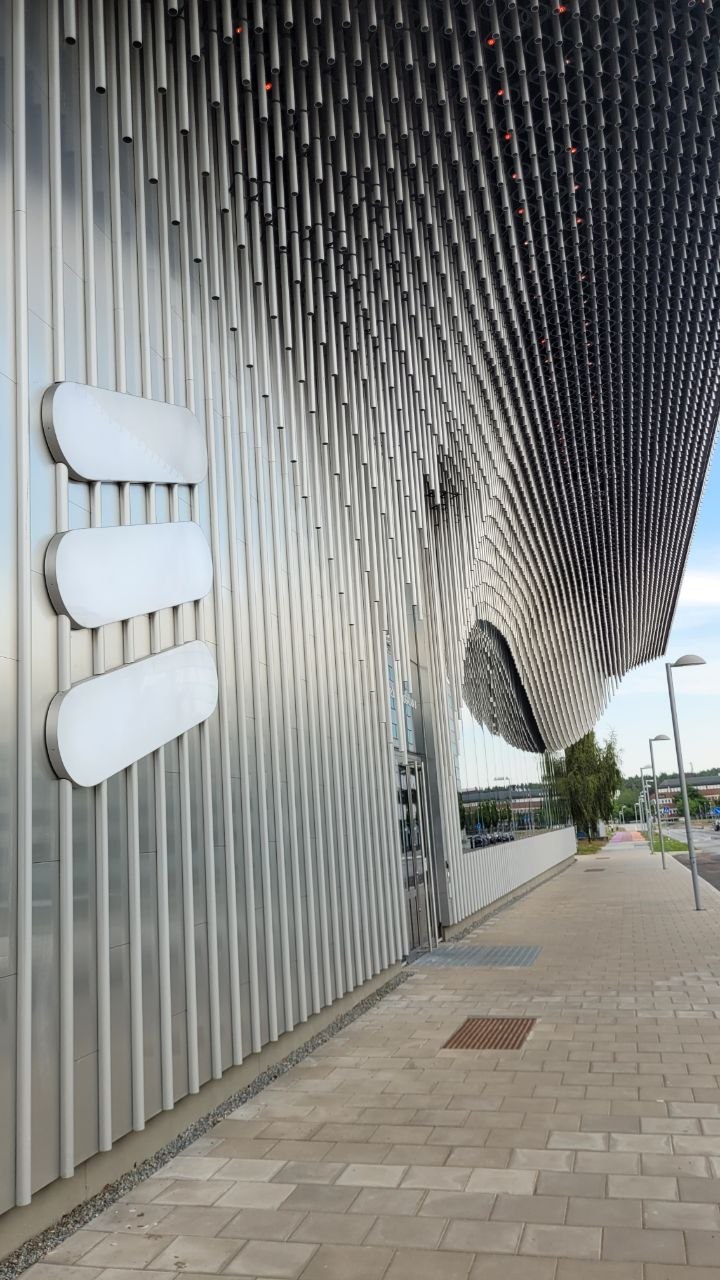
📸 Scenes from two years in Stockholm📸 Escenas de dos años en Estocolmo
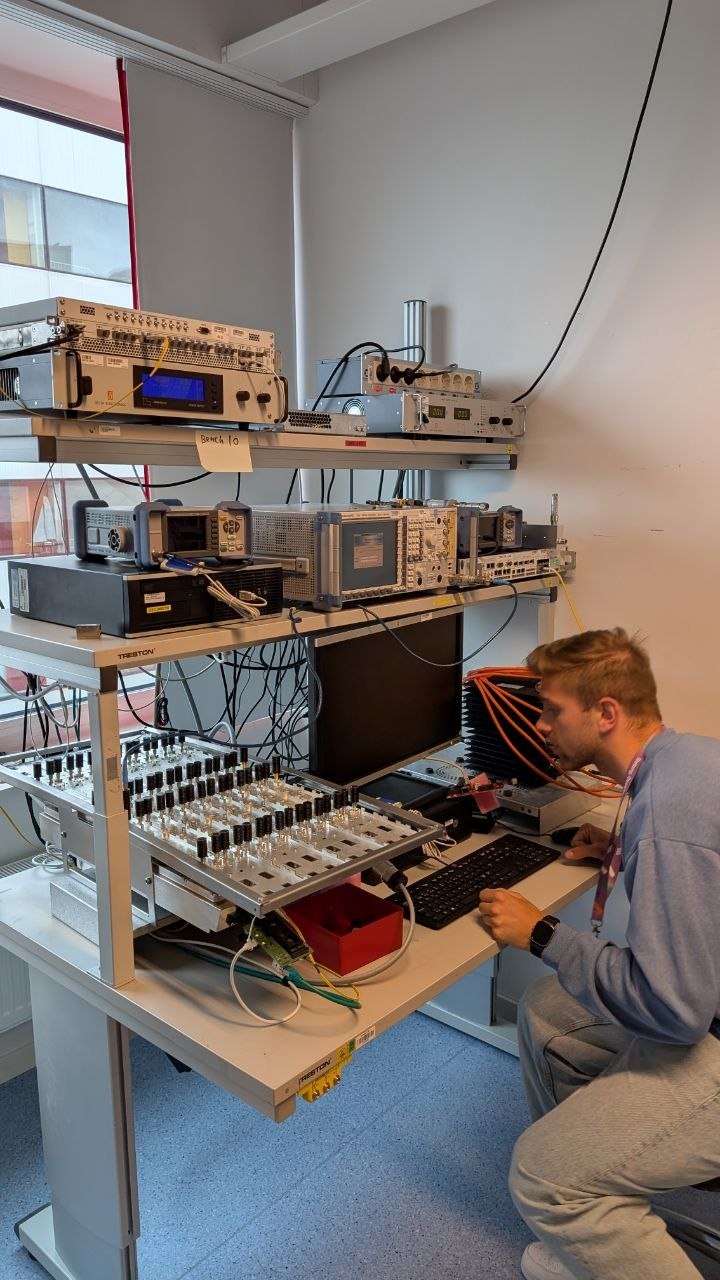
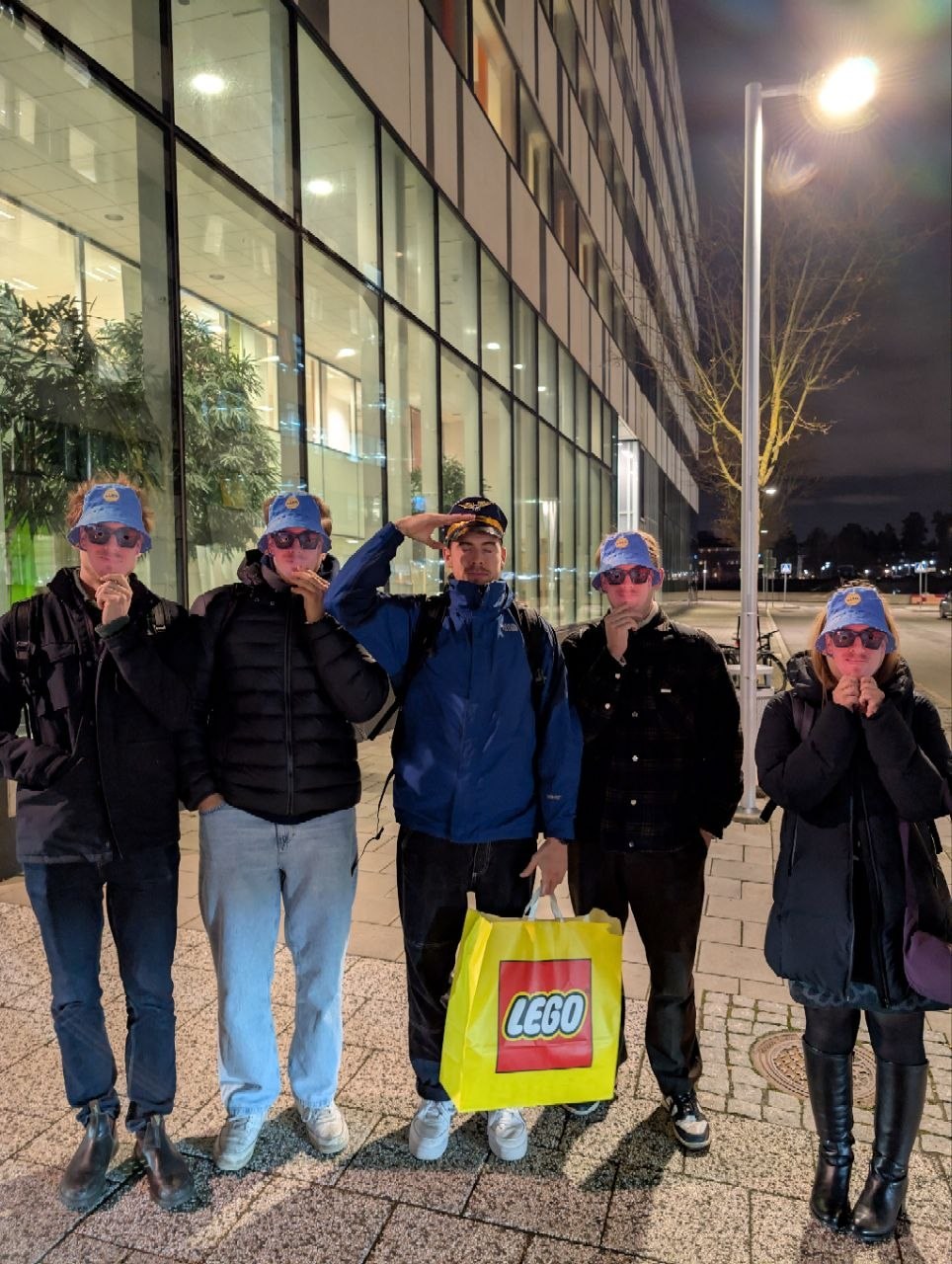
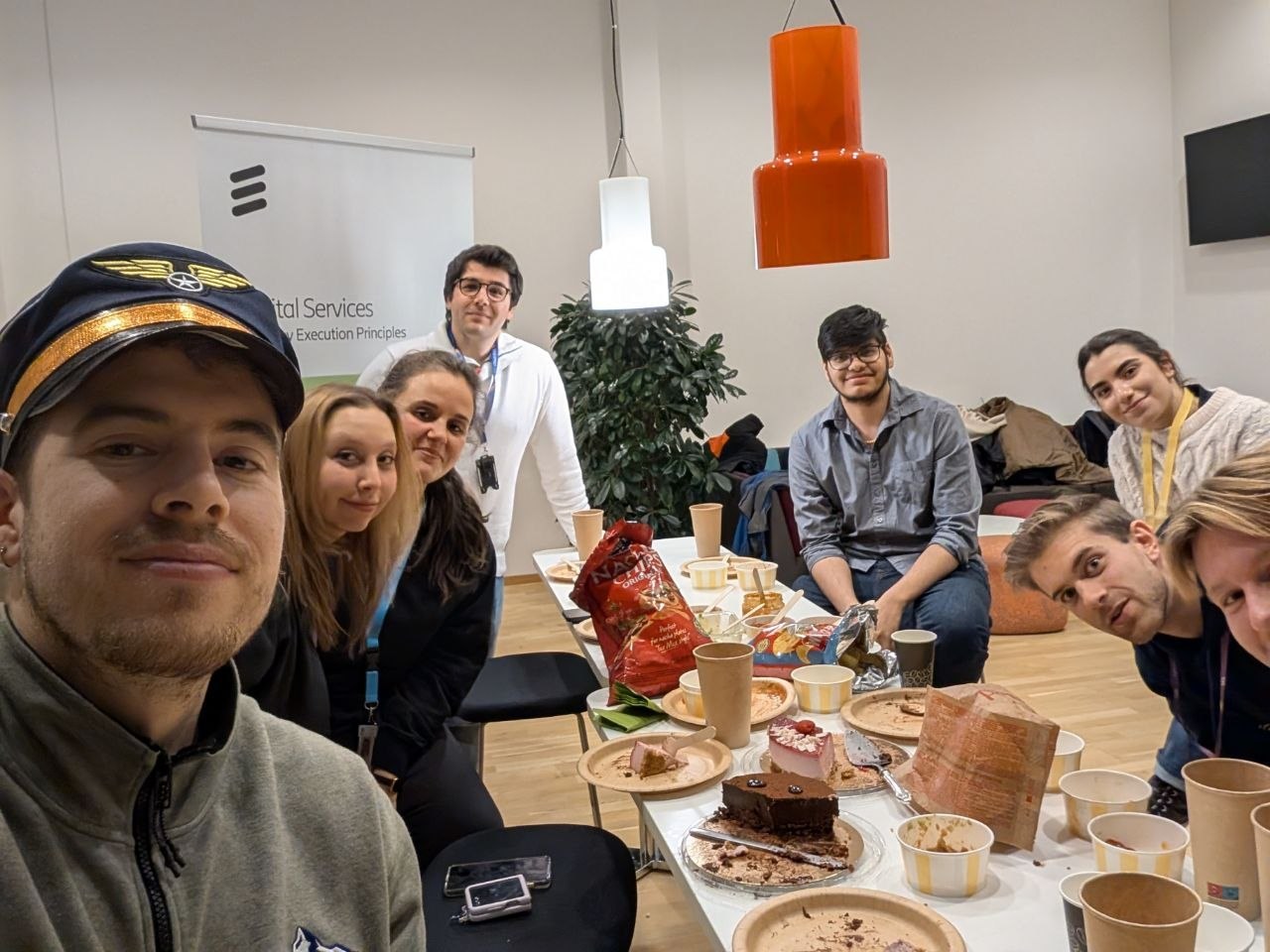
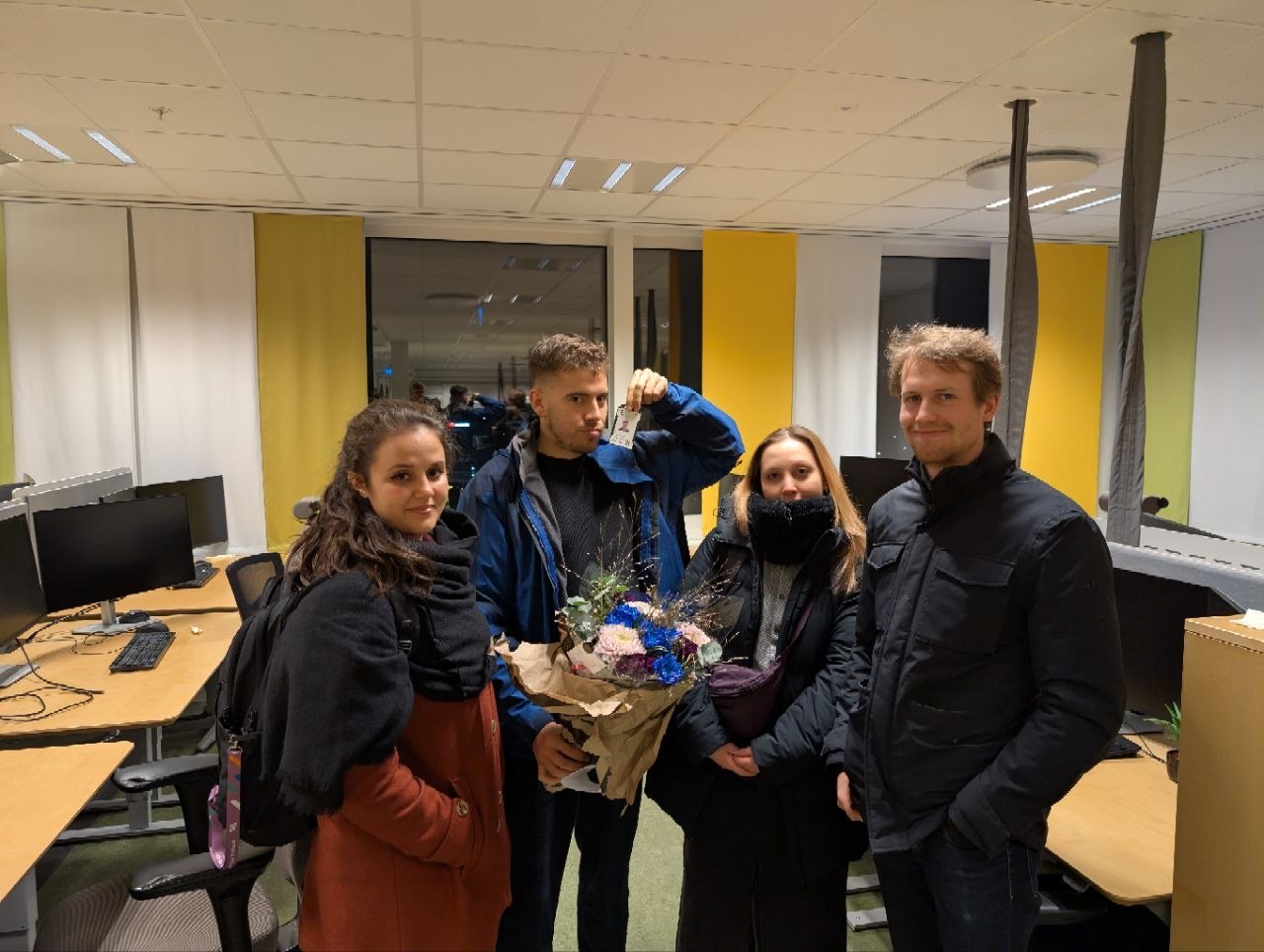
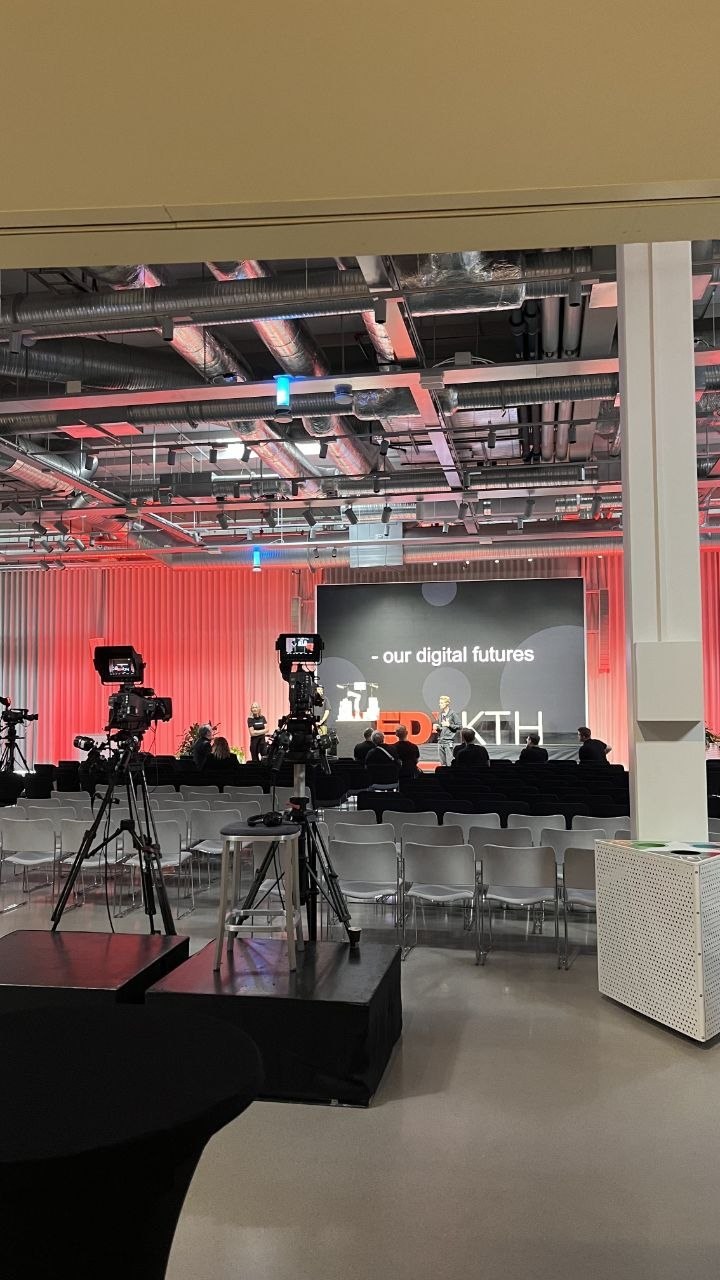
A few snapshots from the office and beyond: the badge, the campus, the gear, the people and the farewells.Algunas fotos de la oficina y más allá: la credencial, el campus, el equipo, la gente y despedidas.

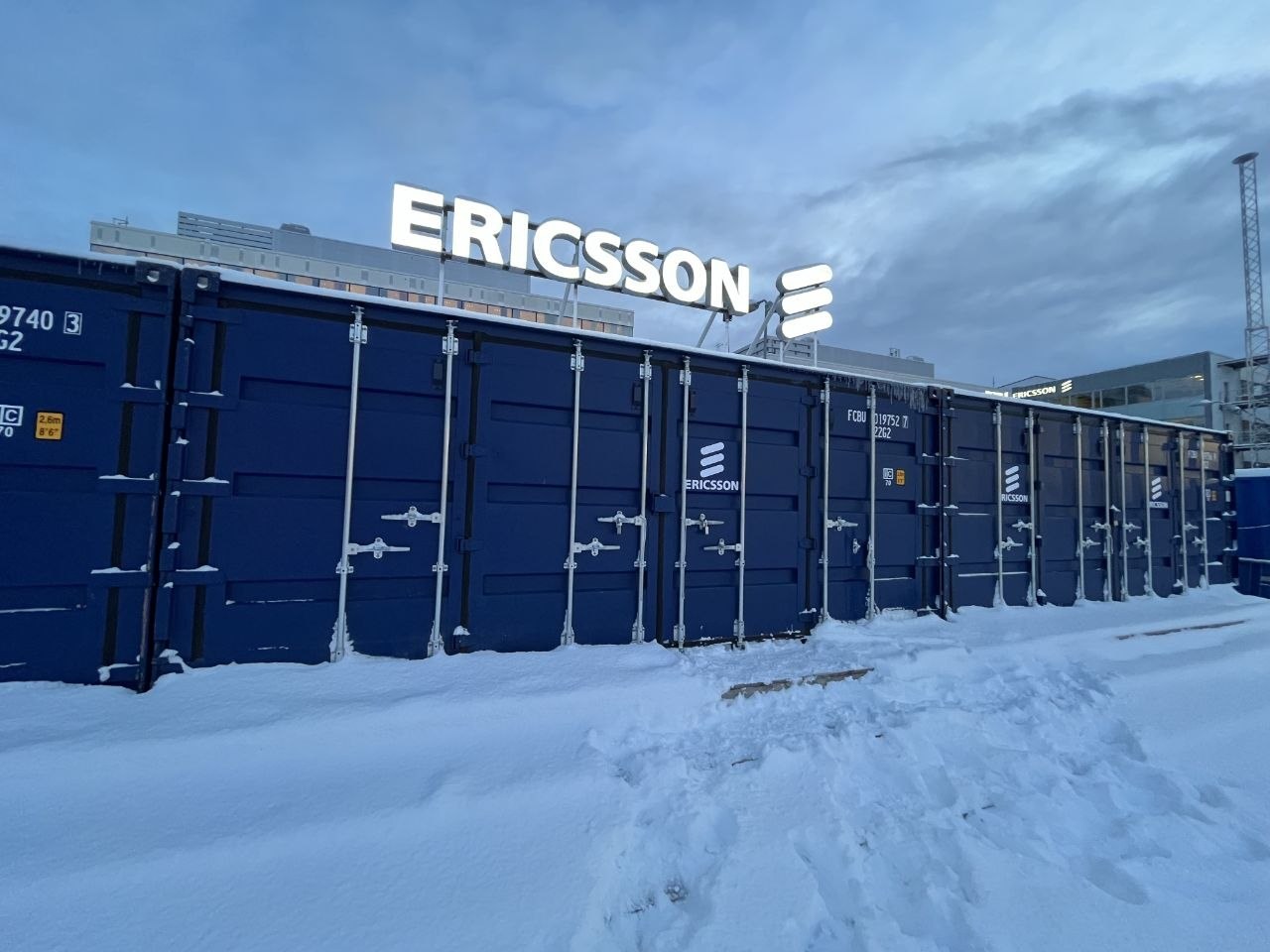
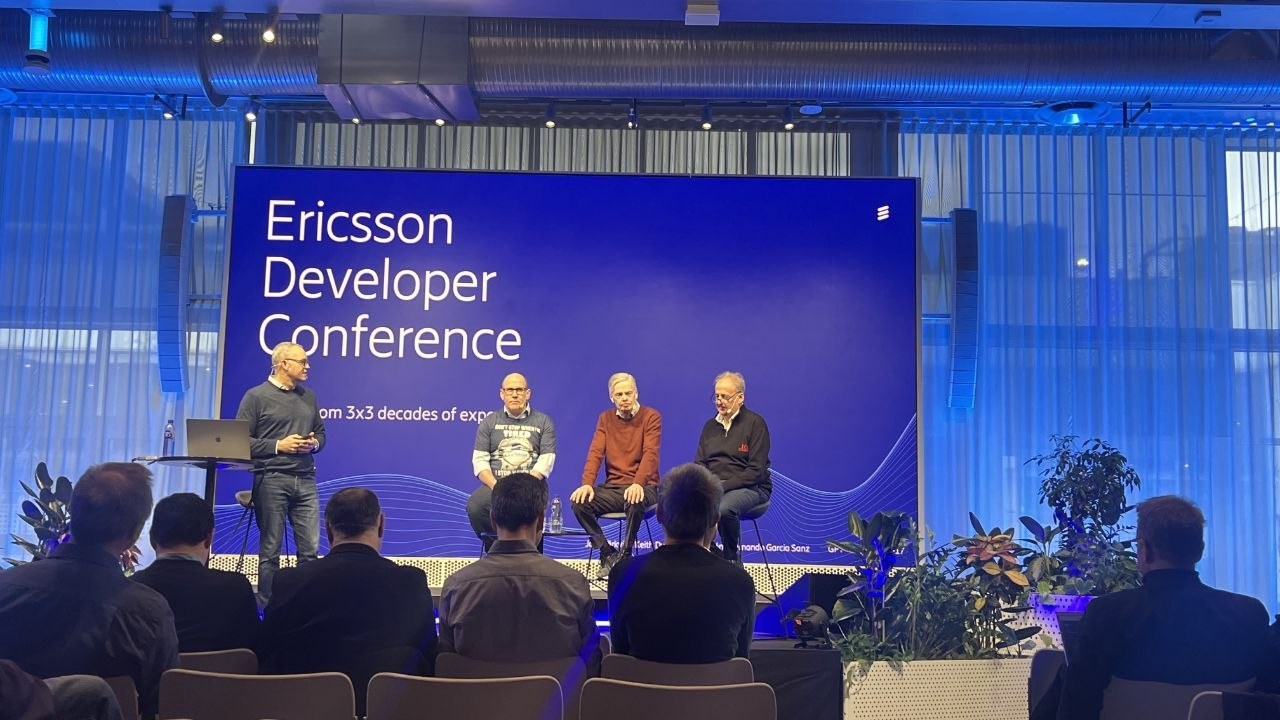
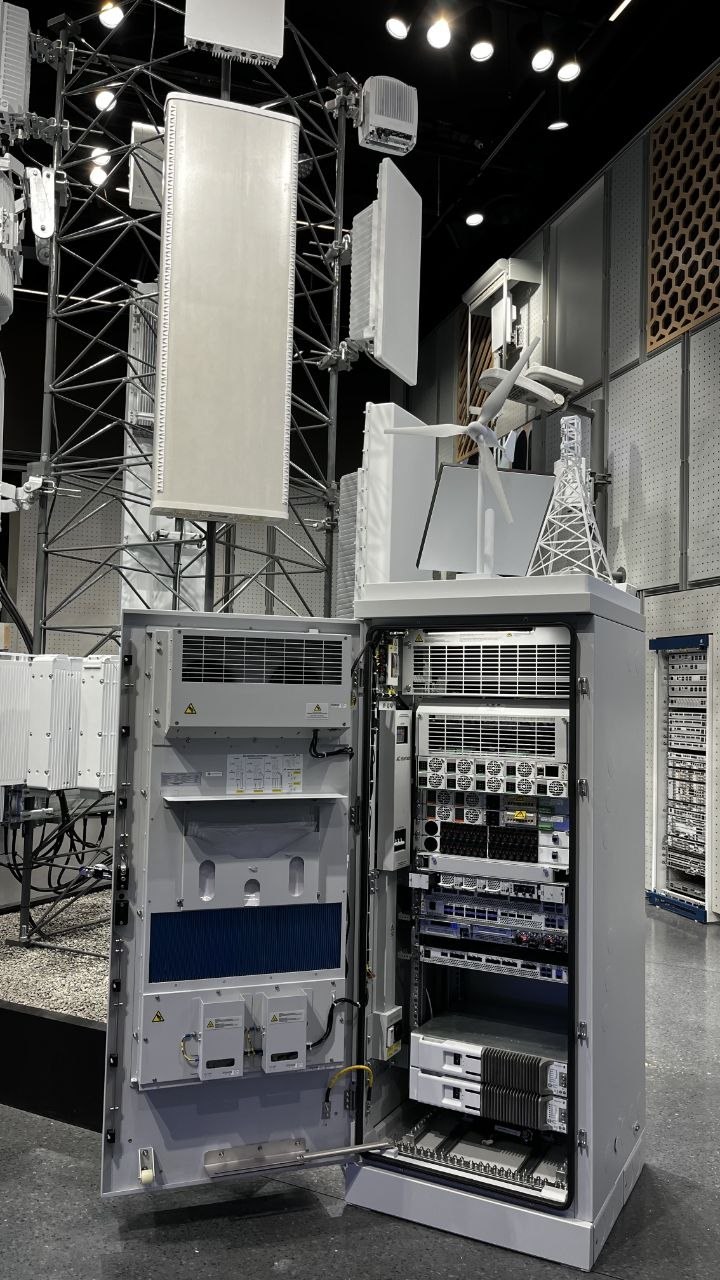
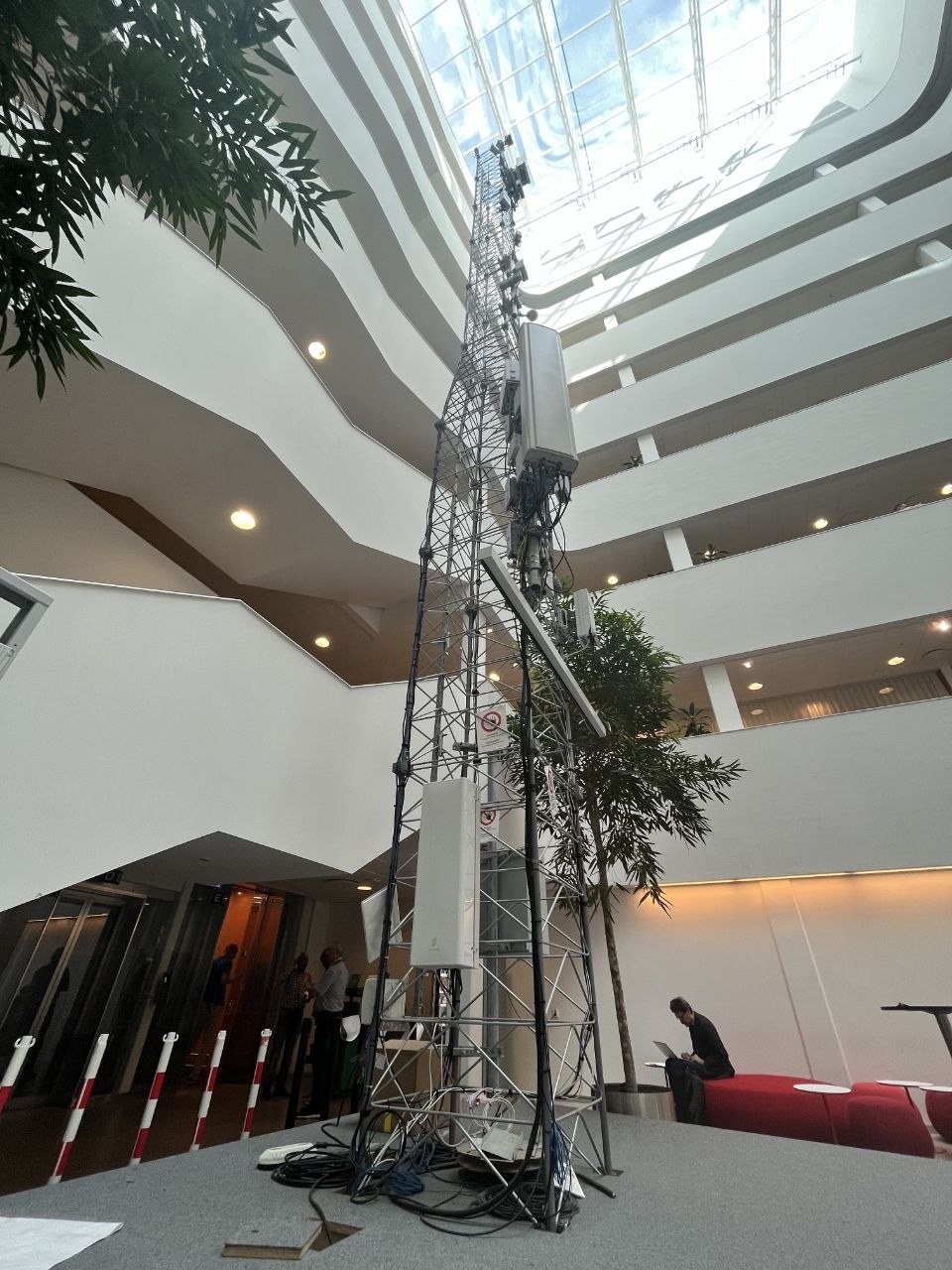
🎬 Moments on video🎬 Clips en video
And three short clips that capture the place and the people: ping-pong in the atrium, a frozen padlock in the Swedish snow, and a little tabletop robotic arm I got to play with.Y tres clips cortos que capturan el lugar y la gente: ping-pong en el atrio, un candado congelado en la nieve sueca y un pequeño brazo robótico de mesa con el que pude jugar.
Ping-pong in the office atrium.Ping-pong en el atrio.
A frozen padlock and a Swedish snowfall.Un candado congelado y una nevada sueca.
A tabletop robotic arm in the office.Brazo robótico de mesa en la oficina.
🎯 Year one: the Next Generation program🎯 Año uno: el programa Next Generation
My first year at Ericsson was a rotational program: instead of being dropped into a single team, I got to try different work areas before choosing where to start my Ericsson career. My first rotation was a taste of what would become a running theme of my portfolio — visualizing connections. I built an interactive tool in JavaScript, HTML and CSS that parses the XML files describing the connections between server components (power units A and B, SEMC, EAM, and friends) and renders them as a navigable graph. Think of it as the corporate cousin of my jQuery Arrows and Graph Sparrow side projects — same instinct, much bigger machines.Mi primer año en Ericsson fue un programa rotacional: en lugar de aterrizar en un único equipo, pude probar distintas áreas antes de elegir dónde empezar mi carrera en Ericsson. Mi primera rotación fue una muestra de un tema recurrente en mi portfolio — visualizar conexiones. Construí una herramienta interactiva en JavaScript, HTML y CSS que parsea los XML de las conexiones entre componentes de servidor (unidades de potencia A y B, SEMC, EAM y compañía) y los muestra como un grafo navegable. Piénsalo como el primo corporativo de mis proyectos jQuery Arrows and Graph Sparrow — mismo instinto, máquinas mucho más grandes.
🔒 2024: microservices and Certificate Management🔒 2024: microservicios y Certificate Management
In 2024 I joined a unit developing microservices used across Ericsson applications and tools, focusing on the Certificate Management service — the piece that keeps secure communication working between services. Concretely, it ensures every service has the right certificates to talk to the external parties it needs, and maintains a whitelist of authorized servers outside the cluster. My work there included implementing new features, upgrading libraries to their latest versions, and building a Helm schema that proactively identifies configuration issues by validating rules before deployment — my first real taste of production-grade security infrastructure and Kubernetes tooling.En 2024 me uní a una unidad que desarrolla microservicios usados en las apps de Ericsson, centrándome en el servicio de Certificate Management — la pieza que asegura la comunicación entre servicios. Garantiza que cada servicio tenga los certificados adecuados para hablar con las entidades externas que necesite y mantiene una whitelist de servidores autorizados fuera del cluster. Implementé nuevas funcionalidades, actualicé librerías a sus últimas versiones y construí un Helm schema que detecta problemas de configuración validando reglas antes del despliegue — mi primer contacto real con la infraestructura de seguridad de producción y el tooling de Kubernetes.
☁️ Cloud integration: Kubernetes, OpenStack & an AI assistant☁️ Integración cloud: Kubernetes, OpenStack y asistente de IA
After a reorganization in 2024, I joined the team integrating Ericsson’s cloud solutions, built on Kubernetes and OpenStack. My focus was automation around those solutions — and the highlight was contributing to an AI tool for internal efficiency: a Retrieval-Augmented Generation (RAG) chain that, given Ericsson’s product documentation, can answer questions about how products work, give step-by-step guidance, and — combined with real-time server data — explain the current status of a system and suggest solutions to potential issues. My part was selecting and deploying the Small Language Model (SLM) behind it, prioritizing efficiency so the tool runs with minimal resource requirements. It was my first time shipping LLM-based software to real users, and it directly paved the way for the voice-command and swarm work that followed in my PhD.Tras una reorganización en 2024 me uní al equipo de integración de las soluciones cloud de Ericsson, basadas en Kubernetes y OpenStack. Mi foco fue automatizarlas — y lo más destacado fue contribuir a una herramienta de IA interna: una cadena de Retrieval-Augmented Generation (RAG) que, con la documentación de producto de Ericsson, responde cómo funcionan los productos, da guías paso a paso y — con datos de servidor en tiempo real — explica el estado de un sistema y sugiere soluciones a posibles problemas. Mi parte fue seleccionar y desplegar el Small Language Model (SLM) que lo impulsa, priorizando la eficiencia para que corra con recursos mínimos. Fue mi primera vez publicando software LLM para usuarios reales, y allanó el camino al trabajo de control por voz y enjambres de mi doctorado.
🏆 What the two years gave me🏆 Lo que gané en dos años
- Production microservices: feature development, dependency upgrades and deployment-time validation in a large, security-critical codebase.Production microservices: desarrollo de features, upgrades de dependencias y validación de despliegue en una codebase grande y crítica.
- Kubernetes & OpenStack: working day-to-day with the cloud stack that runs modern telecom.Kubernetes & OpenStack: trabajo diario con el stack cloud que mueve la telecom moderna.
- Certificate/TLS infrastructure: understanding how trust works between services at scale — the boring stuff that keeps everything else alive.Certificate/TLS infrastructure: entender cómo funciona la confianza entre servicios a escala — lo aburrido que mantiene vivo todo lo demás.
- LLMs in the real world: RAG over technical documentation, SLM selection for efficiency, and live system-data grounding — before it became my research topic.LLMs in the real world: RAG sobre docs técnicas, selección de SLM eficiente y grounding con datos reales — antes de ser mi tema de investigación.
- Big-company engineering: code review culture, incident responses, and making change in a huge organization.Big-company engineering: cultura de code review, respuesta a incidentes y cambios en una gran organización.
🏆 Verifications🏆 Verificación
Ericsson issued me two Credly verifications for the skills I built during the role, both at Experienced level:Ericsson me dio dos verificaciones de Credly por las skills del rol, ambas nivel Experienced:
Cloud Native — Experienced Assessment · BCSS Google Cloud — Experienced Level (issued by Ericsson).Cloud Native — Experienced Assessment · BCSS Google Cloud — Experienced Level (por Ericsson).
I left Ericsson at the end of 2024, on my own request, to start my PhD — with a certificate of employment that, I’m glad to say, recommends me. It was the perfect bridge between my double MSc and the research path I’m on now.Dejé Ericsson a finales de 2024, por decisión propia, para empezar mi doctorado — con un certificado de empleo que me recomienda. Fue el puente perfecto entre mi doble MSc y el camino de investigación que sigo ahora.
EricssonEricsson KubernetesKubernetes OpenStackOpenStack Cloud Engineer · Stockholm · 2023–2024Cloud Engineer · Estocolmo · 2023–24