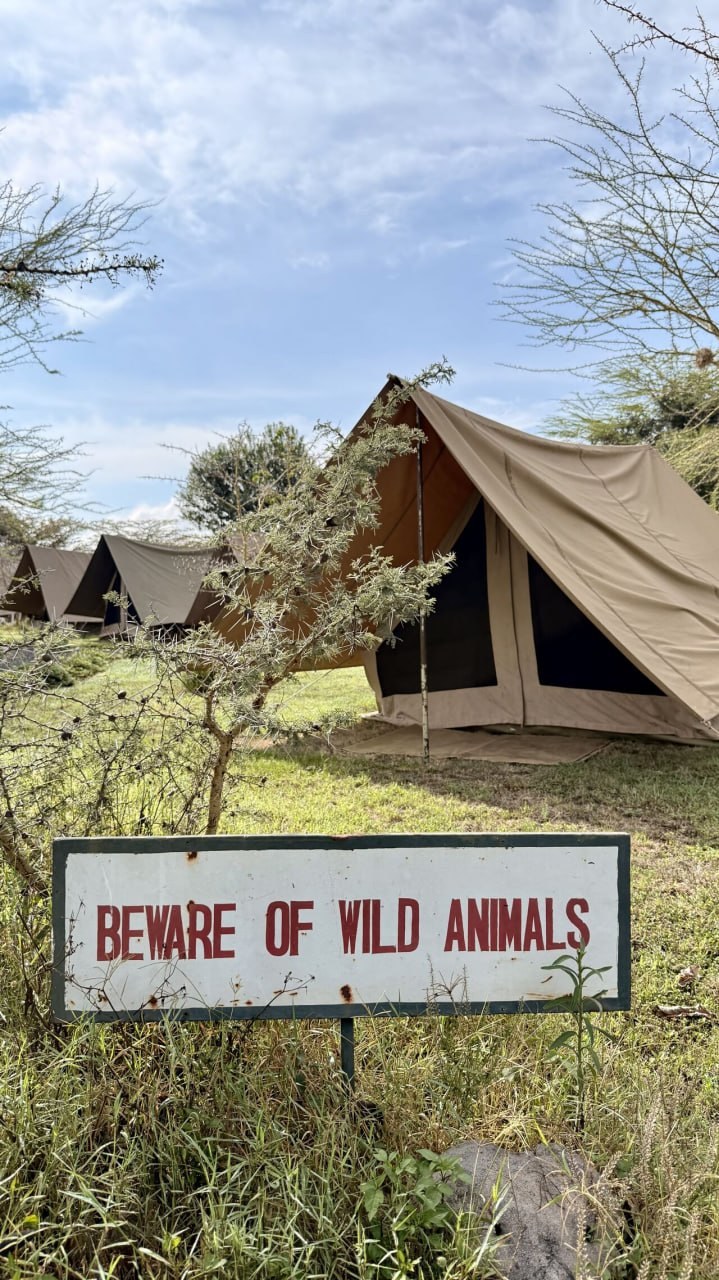
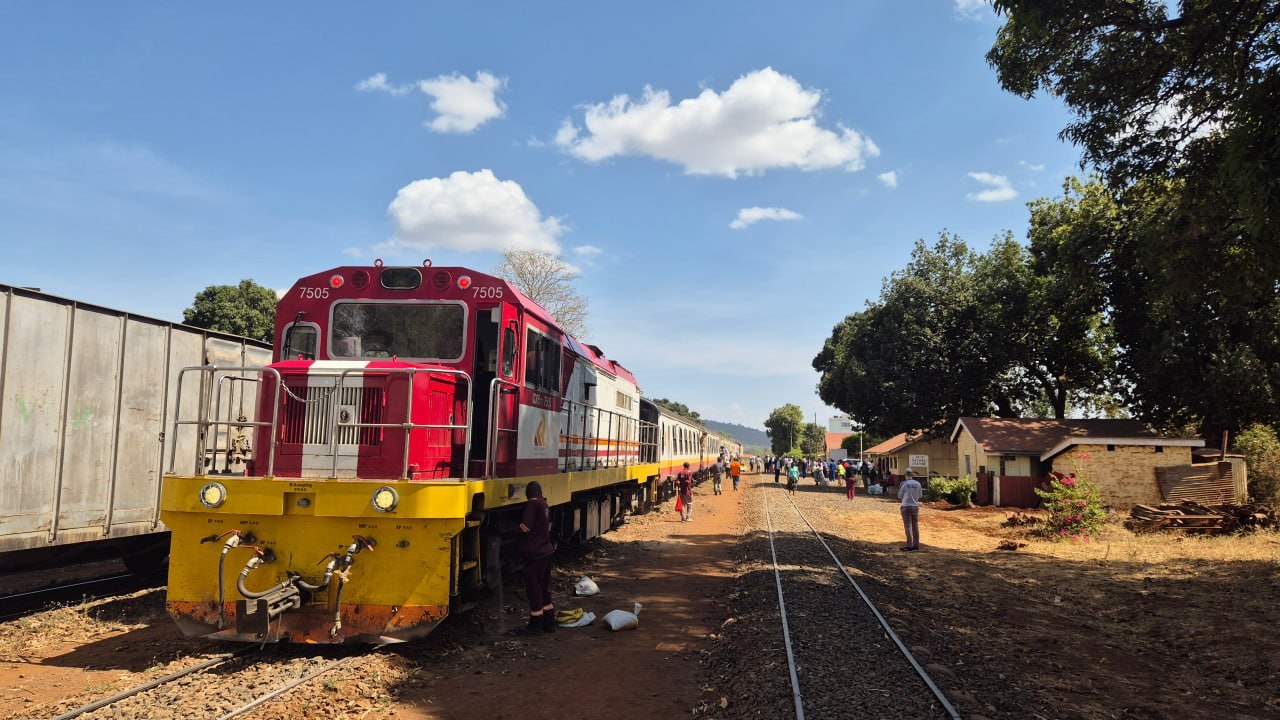
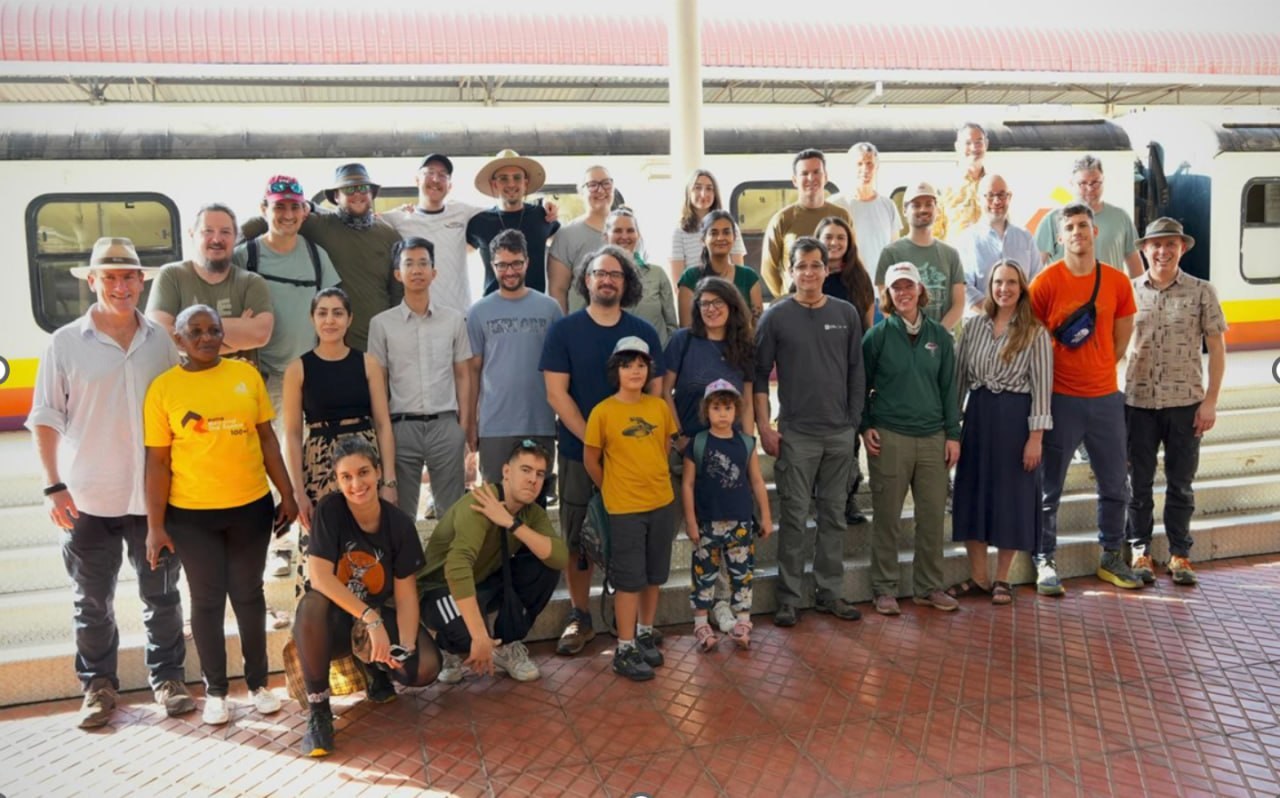
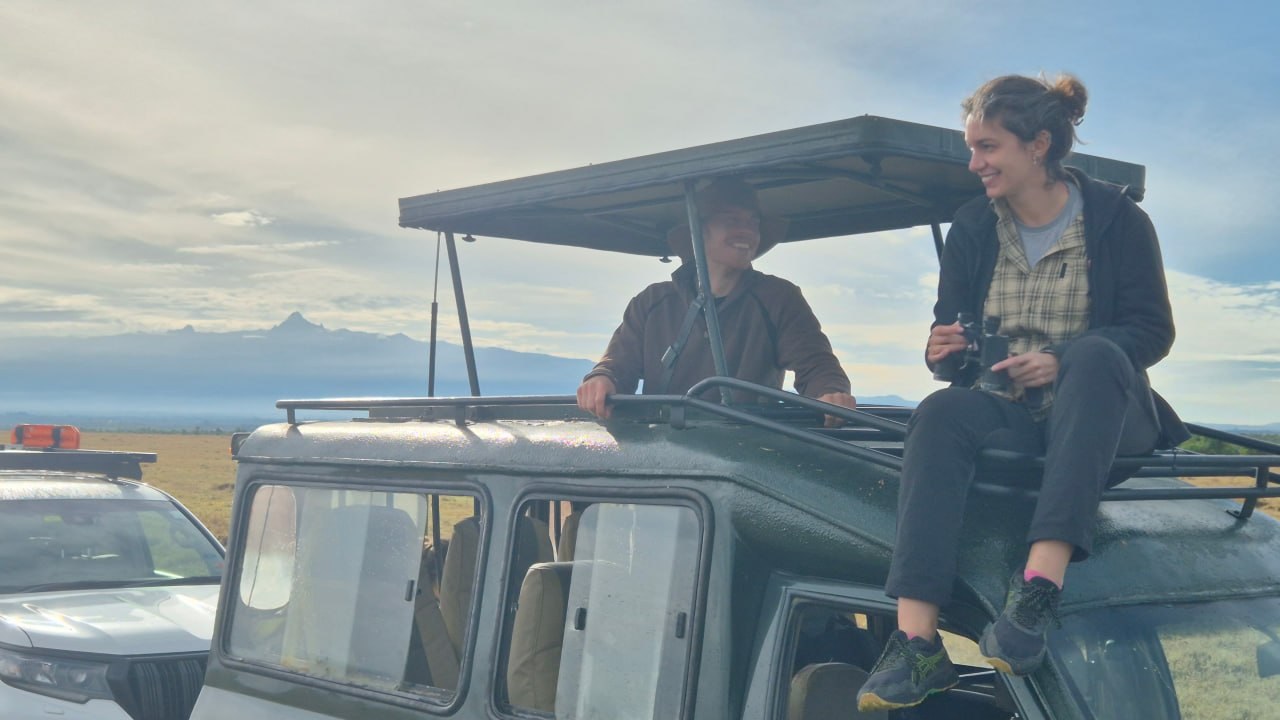
We have just concluded an extraordinary week of technology testing at Ol Pejeta Conservancy and Mpala Research Centre in Laikipia, Kenya — and what a ride! As part of the WildDrone M36 Field Trip Workshop (EU Horizon Europe MSCA Doctoral Network), our international team of researchers, wildlife rangers, and engineers pushed the frontiers of conservation technology: flying solar-powered glider drones, deploying autonomous multi-drone swarms, and applying edge AI to massive amounts of ecological field data. Acabamos de cerrar una semana extraordinaria de pruebas en Ol Pejeta Conservancy y Mpala Research Centre (Laikipia, Kenia) — ¡menuda experiencia! Como parte del WildDrone M36 Field Trip Workshop (EU Horizon Europe MSCA Doctoral Network), nuestro equipo internacional de investigadores, rangers e ingenieros empujó las fronteras de la tecnología de conservación: planeadores solares, enjambres autónomos de drones y edge AI sobre ingentes datos ecológicos de campo.
The global interest was enormous: we were honoured to host television film crews from Sweden, Germany, and Kenya documenting how autonomous robotics and embodied AI are transforming wildlife protection on the frontlines. El interés global fue enorme: recibimos a equipos de TV de Suecia, Alemania y Kenia que documentaron cómo la robótica autónoma y la embodied AI transforman la protección de la fauna en primera línea.
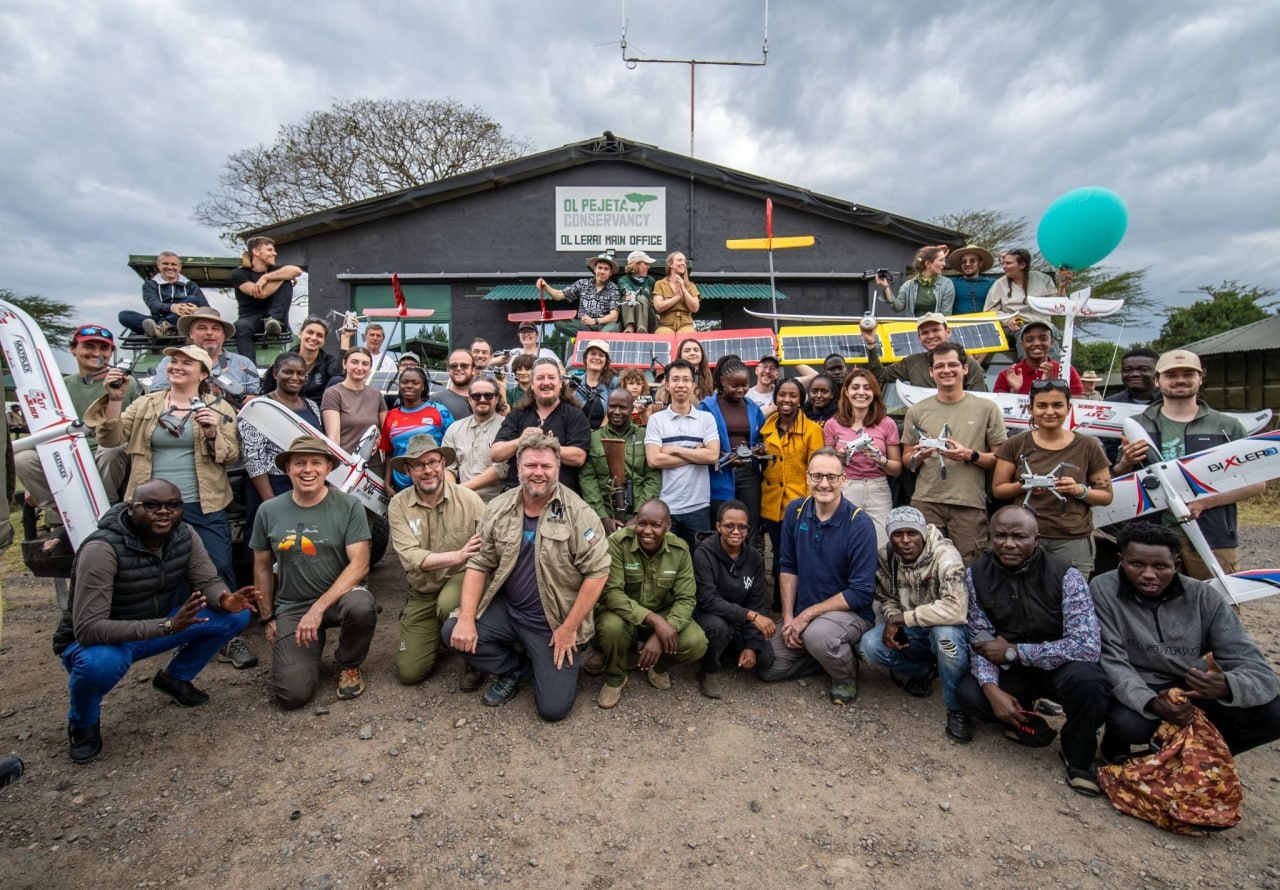
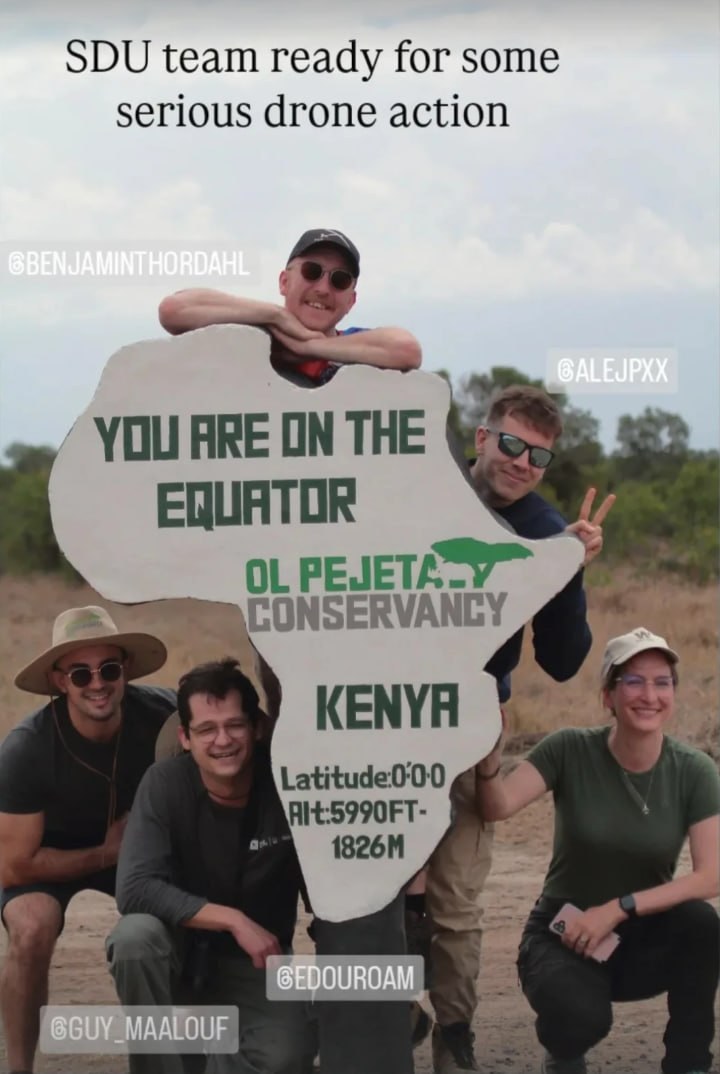
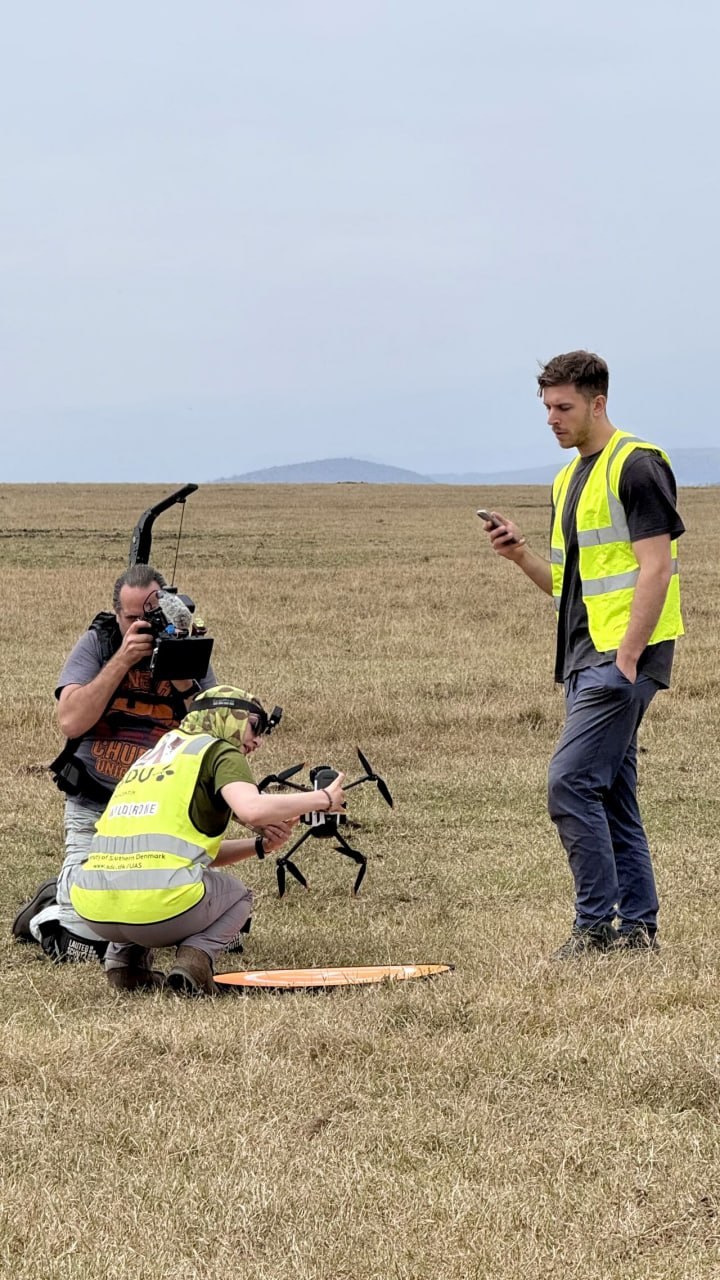
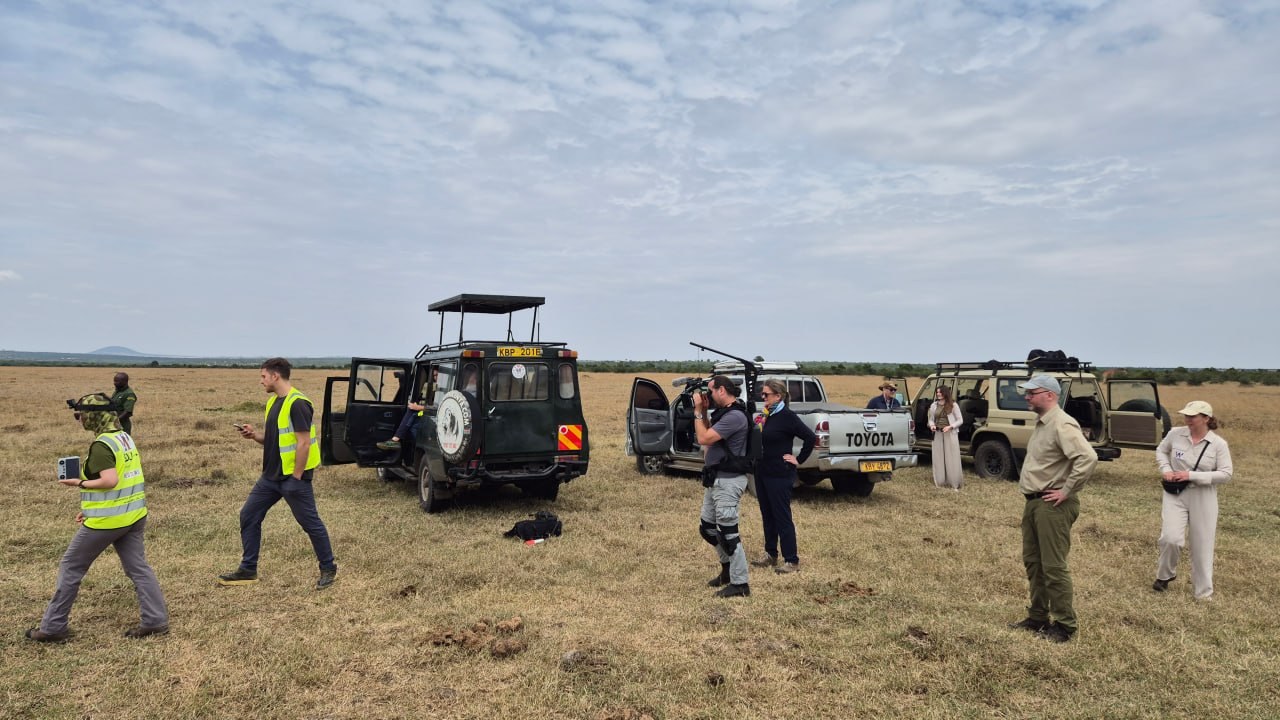
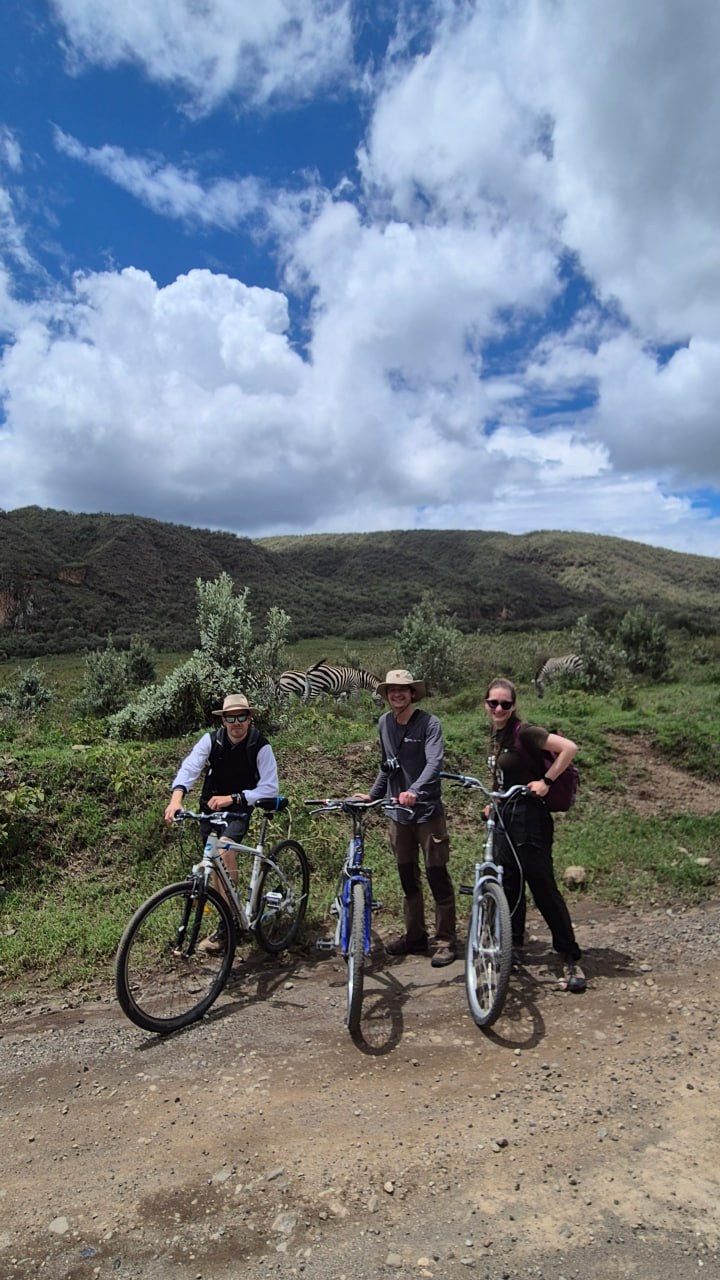
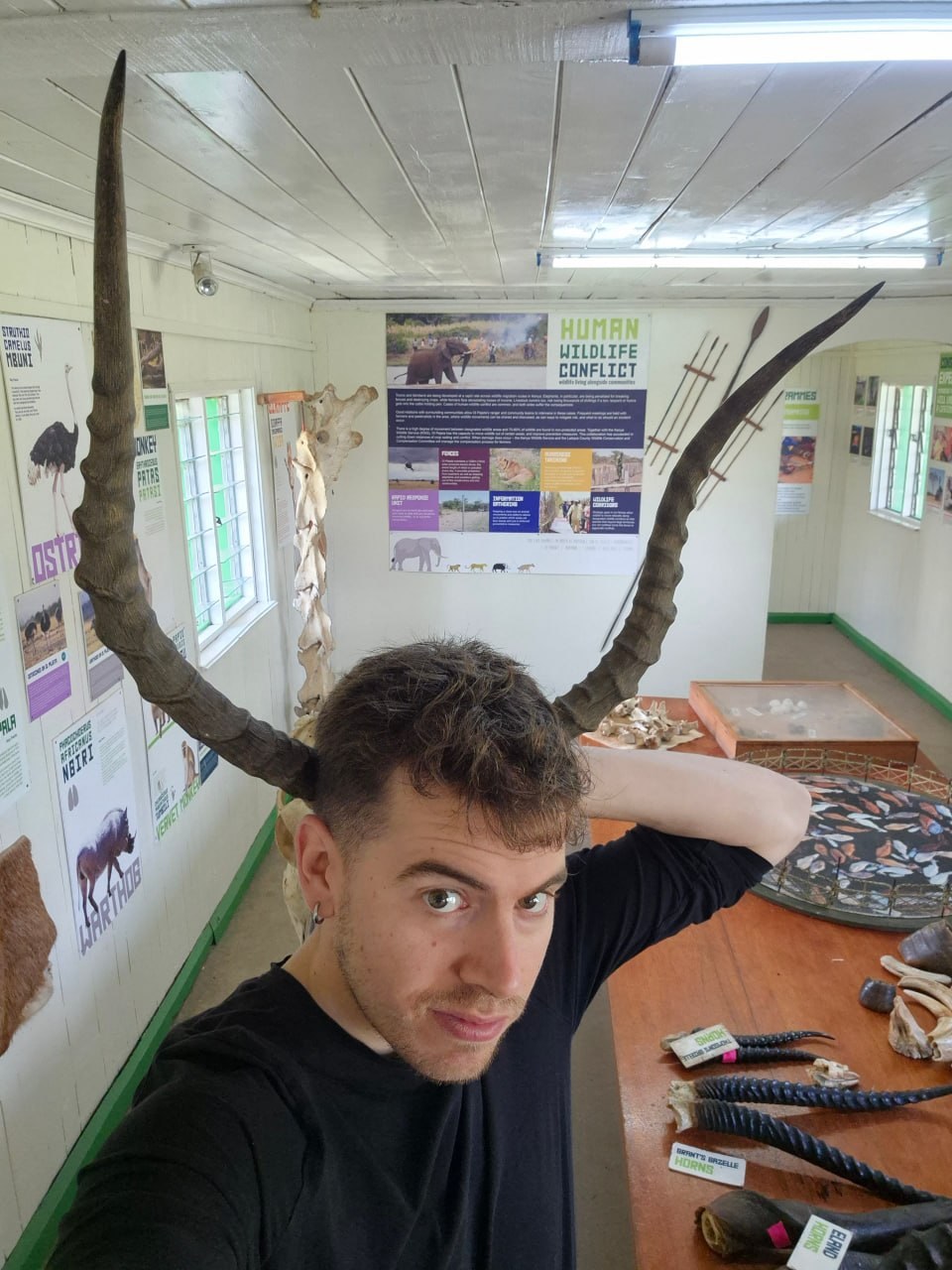
🦏 The Conservation Challenge: Finding Rhinos in Dense Bush🦏 El reto de conservación: rinocerontes en matorral denso
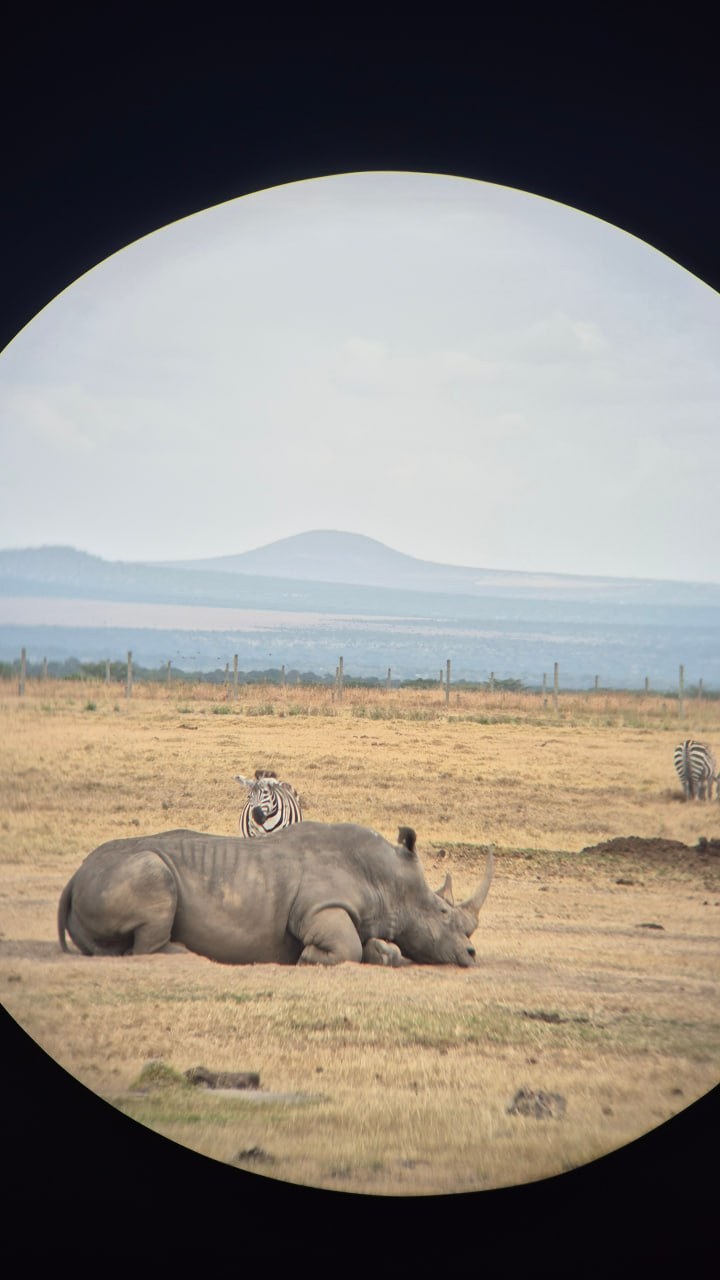
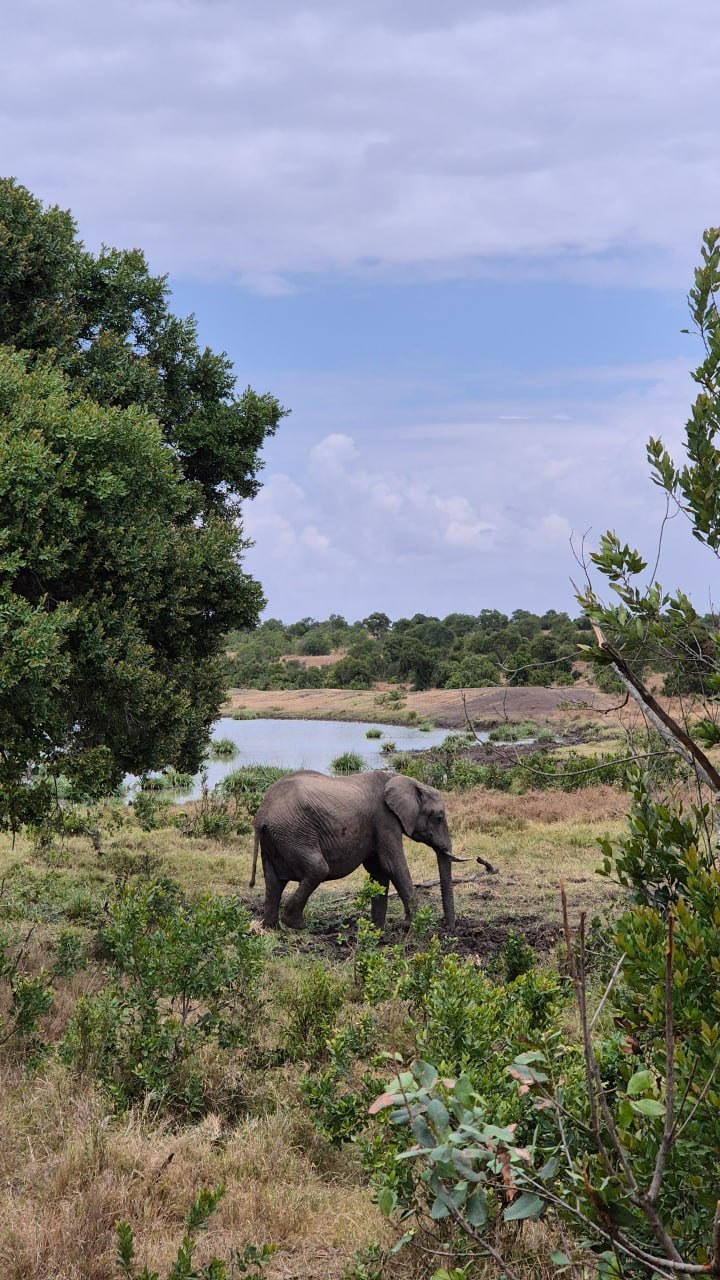
Ol Pejeta Conservancy is home to Africa’s largest population of black rhinos and the world’s last two remaining northern white rhinos. Yet monitoring these magnificent animals in dense bushlands, thick acacia woodlands, and along riverine corridors remains one of conservation’s toughest operational hurdles. When an animal is partially occluded by tree canopies or camouflaged against cluttered brush, detection from a single overhead vantage point frequently fails. Ol Pejeta Conservancy alberga la mayor población de rinocerontes negros de África y los dos últimos rinocerontes blancos del norte. Pero monitorizar a estos magníficos animales en matorrales densos, bosques de acacia y corredores ribereños sigue siendo uno de los mayores retos de la conservación. Cuando un animal está oculto por las copas o camuflado entre la maleza, la detección desde un único punto aéreo falla con frecuencia.
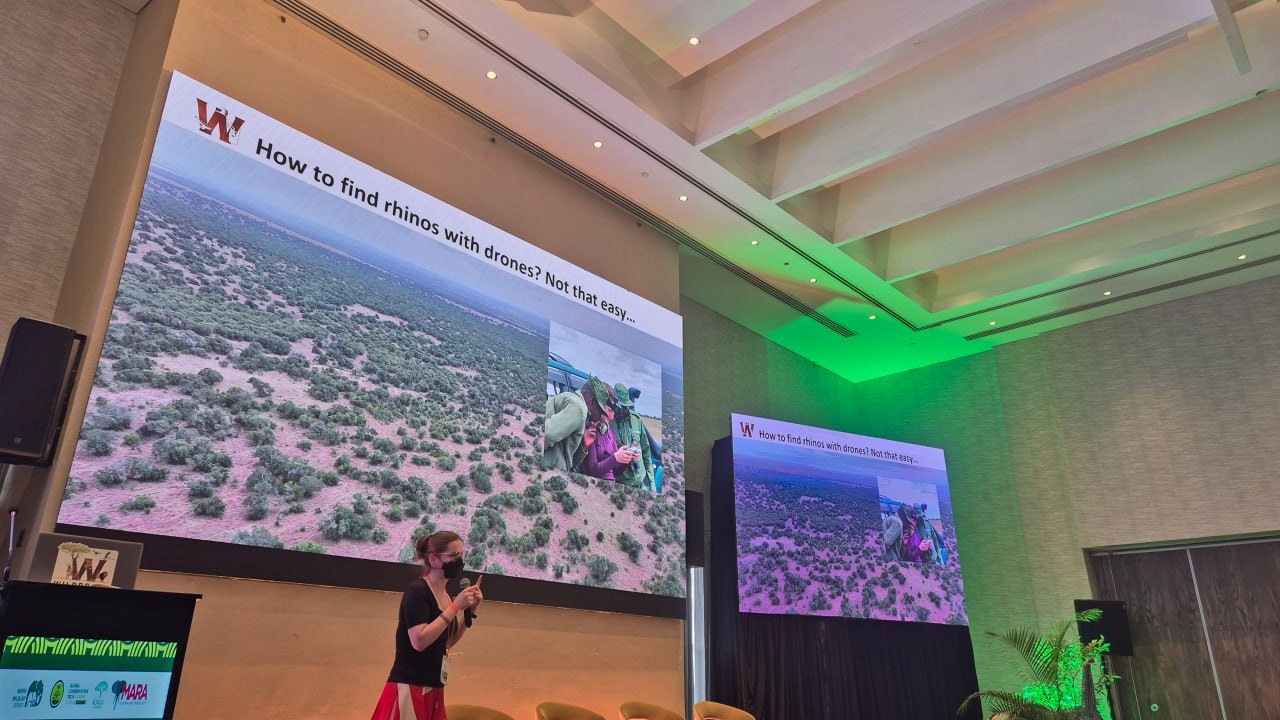
Traditional manual drone operations require constant joystick piloting, struggle with single-angle blind spots, and impose heavy cognitive workload on field rangers. As we highlighted during our presentation at the Global Conservation Tech & Drone Forum in Nairobi: “How to find rhinos with drones? Not that easy...” Las operaciones manuales con drones exigen pilotaje constante con joystick, sufren puntos ciegos de un solo ángulo e imponen gran carga cognitiva a los rangers. Como destacamos en nuestra charla en el Global Conservation Tech & Drone Forum de Nairobi: “How to find rhinos with drones? Not that easy...”
🗣️ WildVoice RhinoScout: Swarm-Steward in the Savannah🗣️ WildVoice RhinoScout: Swarm-Steward en la sabana
To overcome the single-viewpoint limitation, we deployed WildVoice RhinoScout, built directly on our Swarm-Steward natural-language multi-robot coordination architecture (accepted at IEEE ICUAS 2026). Swarm-Steward combines hierarchical LLM-based multi-agent reasoning with spatial grounding, telemetry-aware context retrieval, and deterministic safety validation. Para superar la vista única, desplegamos WildVoice RhinoScout, construido sobre nuestra arquitectura de coordinación multi-robot en lenguaje natural Swarm-Steward (aceptada en IEEE ICUAS 2026). Swarm-Steward combina razonamiento multi-agente jerárquico con LLMs, spatial grounding, recuperación de contexto con telemetría y validación de seguridad determinista.
Integrated with the WildBridge robotics middleware, WildVoice RhinoScout allows a human operator (such as an ecologist or wildlife ranger) to command an entire autonomous drone swarm through intuitive spoken language: Integrado con el middleware robótico WildBridge, WildVoice RhinoScout permite a un operador humano (ecólogo o ranger) comandar un enjambre completo de drones autónomos mediante lenguaje hablado intuitivo:
“Scan between the trees across the northern riverbank.”
“Focus near the bushes and report any large mammal movement.” “Escanea los árboles de la ribera norte.”
“Céntrate en los arbustos e informa de movimientos de mamíferos grandes.”
The system interprets the high-level intent, grounds the references against real-time GPS telemetry and spatial map features, and autonomously translates the command into coordinated search paths across up to 5 DJI Mini 4 Pro drones flying simultaneously. El sistema interpreta la intención, ancla las referencias con telemetría GPS en tiempo real y features del mapa espacial, y traduce autónomamente la orden en rutas de búsqueda coordinadas para hasta 5 drones DJI Mini 4 Pro en vuelo simultáneo.
🎯 Multi-Angle Vision & On-Board YOLO Detection🎯 Visión multi-ángulo y detección YOLO onboard
Each drone in the swarm runs a lightweight YOLO-based detection pipeline trained specifically for rhino detection under heavy occlusion and cluttered vegetation. By dynamically adapting their relative flight formations and viewing angles: Cada dron del enjambre ejecuta un pipeline de detección YOLO entrenado para detectar rinocerontes con oclusión severa y vegetación densa. Adaptando dinámicamente sus formaciones de vuelo y ángulos de visión:
- Nadir & oblique perspectives: Simultaneous top-down and angled viewpoints allow the system to confirm detections that are completely hidden from a single angle.Nadir & oblique perspectives: Los puntos de vista cenital y oblicuo simultáneos permiten confirmar detecciones completamente ocultas desde un solo ángulo.
- 3D Biometrics & Health Assessment: Synchronized multi-perspective imagery supports downstream photogrammetric body-condition scoring (age, sex, nutritional state, pregnancy status).3D Biometrics & Health Assessment: Las imágenes multi-perspectiva sincronizadas permiten el scoring fotogramétrico de condición corporal (edad, sexo, estado nutricional, gestación).
- Low Disturbance: Autonomous trajectory optimization ensures quiet, non-invasive observation without stressing sensitive wildlife.Low Disturbance: La optimización autónoma de trayectorias asegura observación silenciosa y no invasiva, sin estresar a la fauna.
⚡ Field Results & Lessons Learned⚡ Resultados de campo y lecciones
Field deployments in Laikipia proved the robustness of the voice-driven swarm architecture: En Laikipia se probó la robustez de la arquitectura de enjambre por voz:
- Reliable Spoken Coordination: Voice interaction and multi-agent intent translation executed consistently throughout the trials, enabling rapid re-routing of swarm members on the fly.Reliable Spoken Coordination: La interacción por voz y la traducción de intención multi-agente fueron consistentes en las pruebas, con re-routing rápido de los miembros del enjambre.
- Offline Detection Accuracy: The YOLO detection model demonstrated exceptional performance on recorded field datasets across open grassland, shrublands, and dense riverbanks.Offline Detection Accuracy: El modelo de detección YOLO demostró un rendimiento excepcional en datasets de campo grabados: praderas abiertas, arbustales y riberas densas.
- Overcoming Video Bottlenecks: While early missions contended with intermittent live video bandwidth over savanna terrain, we resolved the transmission pipeline in the final days, stabilizing real-time 1080p video streaming at 10 fps.Overcoming Video Bottlenecks: Las primeras misiones sufrieron ancho de banda de vídeo intermitente en la sabana; al final resolvimos el pipeline de transmisión, estabilizando el streaming 1080p en tiempo real a 10 fps.
The curated rhino detection dataset along with our trained YOLO weights will be released open-source to support the global conservation robotics community, and a full research paper detailing the system architecture and field benchmarks is currently in preparation. El dataset curado de detección de rinocerontes y los pesos YOLO entrenados se publicarán como open-source para apoyar a la comunidad global de robótica de conservación; un paper completo con la arquitectura del sistema y los benchmarks de campo está en preparación.
🛸 Solar Gliders, Tethered Balloons & Multi-Perspective Swarms🛸 Planeadores solares, globos y enjambres multi-perspectiva
WildVoice RhinoScout was part of a much broader, highly collaborative research effort across the WildDrone consortium during the 9-day field trip. A wide spectrum of cutting-edge conservation robotics projects was tested across Ol Pejeta and Mpala Conservancies: WildVoice RhinoScout formó parte de un esfuerzo de investigación mucho más amplio y colaborativo del consorcio WildDrone durante los 9 días de trabajo de campo. Se probó un amplio abanico de proyectos punteros de robótica de conservación en Ol Pejeta y Mpala:
- Solar-Powered Gliders (Helios & MACE v0): Teams from SDU and the University of Bristol field-tested lightweight, solar-powered fixed-wing gliders designed for ultra-long-endurance Beyond Visual Line of Sight (BVLOS) monitoring. The tropical sun in Laikipia provided an ideal proving ground to assess solar energy harvesting, flight dynamics, and endurance under realistic conservation conditions. Solar-Powered Gliders (Helios & MACE v0): Equipos de SDU y la University of Bristol probaron planeadores solares ligeros de ala fija para monitorización BVLOS de ultra-larga duración. El sol tropical de Laikipia fue ideal para evaluar captación solar, dinámica de vuelo y resistencia en condiciones reales de conservación.
- WildSwarm & Multi-Perspective Herd Tracking: Edouard Rolland (SDU) deployed autonomous swarms of DJI Mini 4 Pro drones to simultaneously capture synchronized top-down (nadir) and horizontal (oblique) perspectives of plain zebras and giraffes. This multi-viewpoint telemetry enables 3D animal reconstruction, posture estimation, and social interaction mapping without human disturbance. WildSwarm & Multi-Perspective Herd Tracking: Edouard Rolland (SDU) desplegó enjambres autónomos de drones DJI Mini 4 Pro para capturar a la vez perspectivas cenitales (nadir) y oblicuas (horizontales) de cebras y jirafas. Esta telemetría multi-viewpoint permite reconstrucción 3D, estimación de postura y mapeo de interacción social sin perturbar a los animales.
- WildDisturbance & Swarm Acoustics: Researchers measured the acoustic footprint of multi-drone swarms across different flight altitudes and formation spacings in open savannah environments, recording wildlife behavioural responses to establish empirical guidelines for noise-minimizing drone operations (submitted to Quiet Drones 2026). WildDisturbance & Swarm Acoustics: Se midió la huella acústica de enjambres multi-drone a distintas altitudes y separaciones en sabanas abiertas, registrando las respuestas de la fauna para establecer guías empíricas de operaciones silenciosas (enviado a Quiet Drones 2026).
- Tethered Balloon Aerostats (WildBalloons): Helium-filled tethered balloon platforms equipped with high-resolution payloads were evaluated for zero-rotor-noise, persistent, hours-long surveillance over watering holes and migration corridors. Tethered Balloon Aerostats (WildBalloons): Plataformas de globos cautivos llenos de helio con payloads de alta resolución se evaluaron para vigilancia persistente de horas, sin ruido de rotores, sobre abrevaderos y corredores migratorios.
- Aerial Photogrammetry on 86 Rhinos (WildRhino): Camille Rondeau Saint-Jean (SDU), working alongside Ol Pejeta’s expert rangers, collected aerial video and laser-rangefinder photogrammetry on 86 individual black and white rhinos (including direct physical measurements during ranger-led translocations) to calibrate non-invasive biometric models for body condition, age, and pregnancy. Aerial Photogrammetry on 86 Rhinos (WildRhino): Camille Rondeau Saint-Jean (SDU), junto a los rangers expertos de Ol Pejeta, recopiló vídeo aéreo y fotogrametría con laser-rangefinder de 86 rinocerontes negros y blancos (con mediciones físicas directas durante translocaciones con rangers) para calibrar modelos biométricos no invasivos de condición, edad y gestación.
- Adaptive Search vs. Lawnmower Routing (WildSearch): University of Bristol and Southampton researchers benchmarked entropy-driven search algorithms balancing exploration and re-viewing against traditional lawnmower coverage over wildlife watering holes. Adaptive Search vs. Lawnmower Routing (WildSearch): Investigadores de la University of Bristol y Southampton compararon algoritmos de búsqueda entropy-driven que equilibran exploración y re-visión frente al barrido lawnmower sobre abrevaderos.
🏛️ Nairobi Outreach & United Nations Visit🏛️ Difusión en Nairobi y visita a la ONU
Following the fieldwork in Laikipia, our team travelled to Nairobi to present our findings at the Global Conservation Tech & Drone Forum (GCTDF) and the Women in Conservation Forum. A central pillar of the WildDrone mission is capacity building and knowledge transfer: Tras el trabajo de campo en Laikipia, viajamos a Nairobi para presentar resultados en el Global Conservation Tech & Drone Forum (GCTDF) y el Women in Conservation Forum. Un pilar clave de WildDrone es el capacity building y la transferencia de conocimiento:
- We conducted structured robotics and computer vision demonstrations with students at Kenyatta University (KU), opening pathways for the next generation of African conservation technologists.Realizamos demostraciones de robótica y computer vision con estudiantes de Kenyatta University (KU), abriendo camino a la próxima generación de tecnólogos africanos de la conservación.
- Team members visited the United Nations Complex in Nairobi (UNON) to discuss how autonomous aerial systems and embodied AI can inform international biodiversity monitoring and environmental policy.El equipo visitó el United Nations Complex in Nairobi (UNON) para debatir cómo los sistemas aéreos autónomos y la embodied AI pueden apoyar el monitoreo de biodiversidad y la política ambiental.
🏖️ Unwinding on the Kenyan Coast: Watamu & the Indian Ocean🏖️ Descanso en la costa de Kenia: Watamu y el Índico
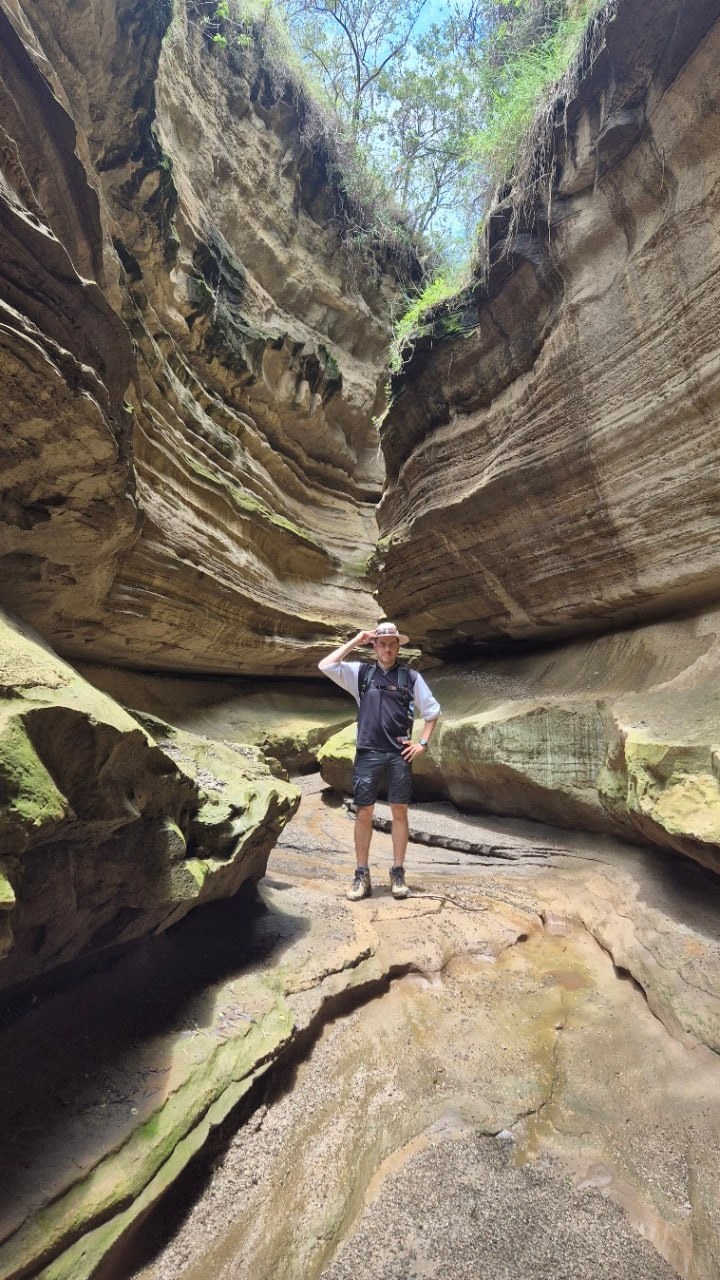
After an intense, sun-drenched fortnight of field experiments, data crunching, and forum presentations, we wrapped up the expedition by spending our final week on a well-deserved vacation along the stunning tropical coast of Kenya. Tras una intensa quincena de experimentos de campo, análisis de datos y presentaciones, cerramos la expedición con una semana final de vacaciones bien merecidas en la impresionante costa tropical de Kenia.
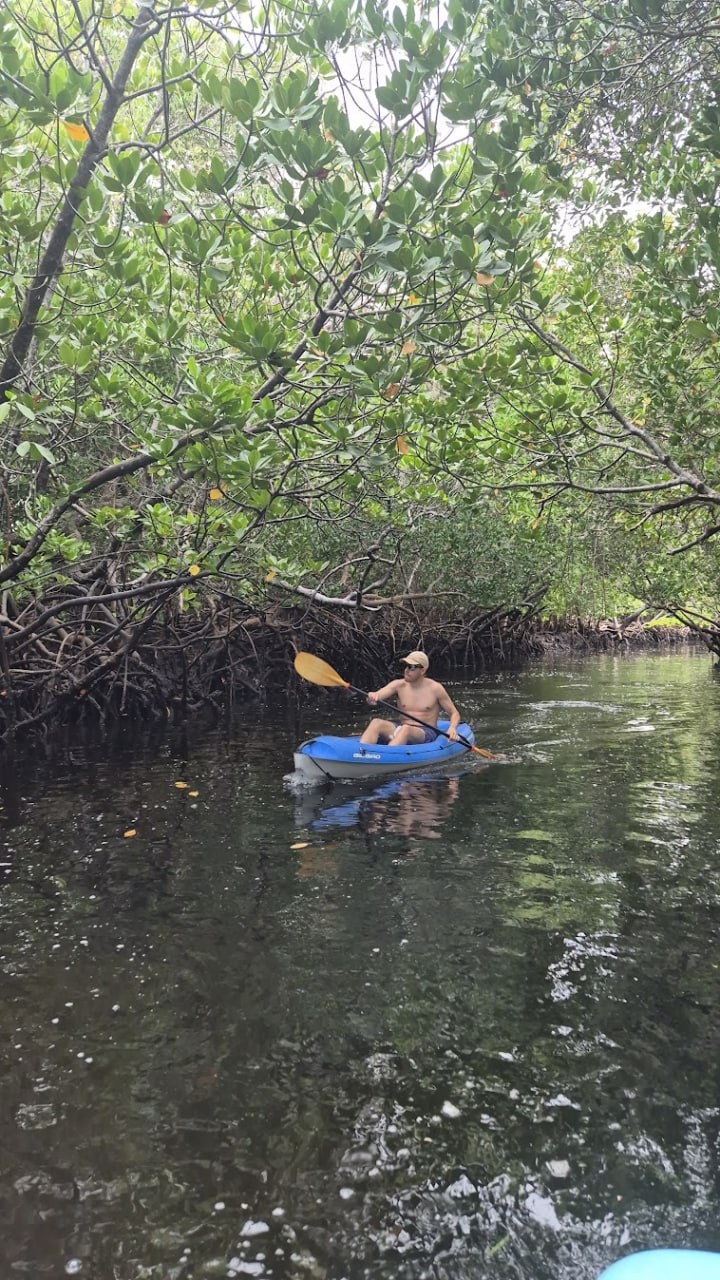
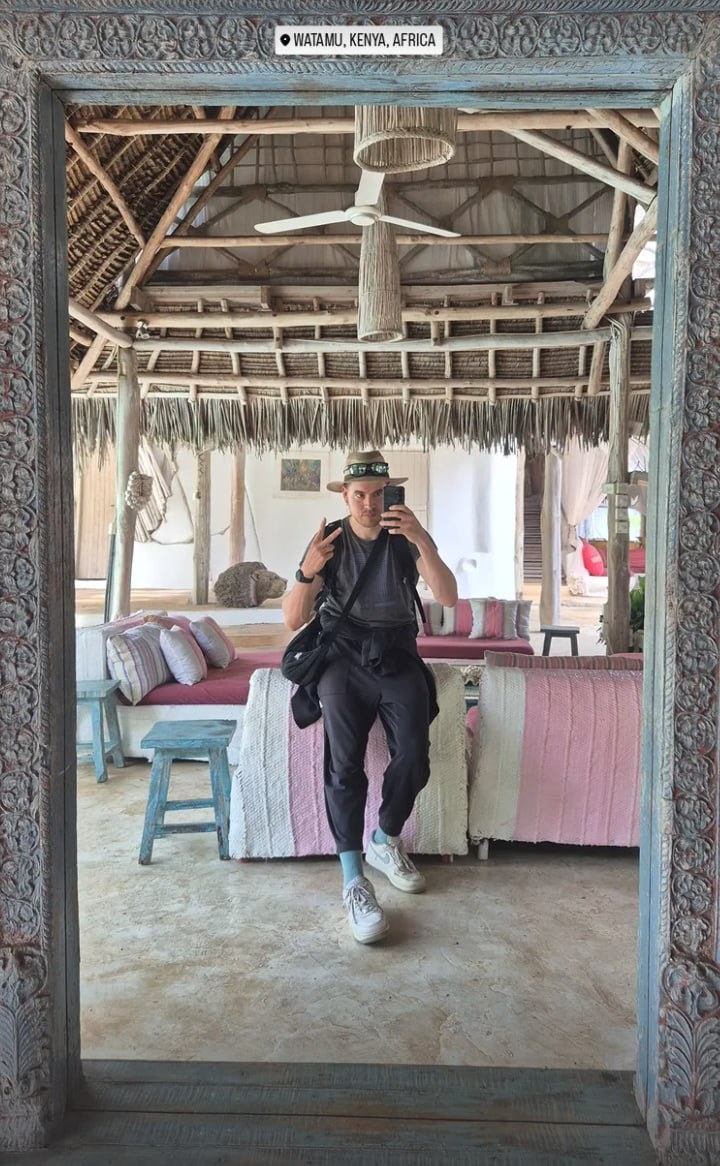
From relaxing on the white sand beaches of Watamu and exploring the turquoise waters of the Indian Ocean to navigating coastal mangrove channels and soaking in the local Swahili culture and carved architecture, it was the perfect adventure to recharge before returning to Europe with hard drives full of data! Entre playas de arena blanca en Watamu, aguas turquesa del océano Índico, canales de manglar y la cultura suajili con su arquitectura tallada, fue la aventura perfecta para recargar pilas antes de volver a Europa con los discos duros llenos de datos.
March 2026 · WildDrone Field TripMarch 2026 · WildDrone Field Trip WildDrone EUWildDrone EU Swarm-Steward (ICUAS 2026)Swarm-Steward (ICUAS 2026) Ol PejetaOl Pejeta
WildDrone is an MSCA Doctoral Network funded by the European Union’s Horizon Europe research and innovation programme under grant agreement no. 101071224. WildDrone es una MSCA Doctoral Network financiada por Horizon Europe (EU) bajo el grant agreement no. 101071224.