Between October 2019 and June 2021 I worked as a Data Science Researcher (internship) at Cabify in Madrid — a year and nine months of research on real, city-scale mobility data that in its second year became part of the newly created Cátedra Cabify-UPM at ETSIT. It is the period that turned my bachelor’s thesis into two conference papers and an IEEE journal publication. Entre octubre de 2019 y junio de 2021 trabajé como Data Science Researcher (internship) en Cabify, en Madrid — un año y nueve meses investigando datos de movilidad real a escala urbana que en su segundo año pasó a formar parte de la nueva Cátedra Cabify-UPM en la ETSIT. Fue el periodo que convirtió mi tesis de grado en dos conference papers y un IEEE journal paper.
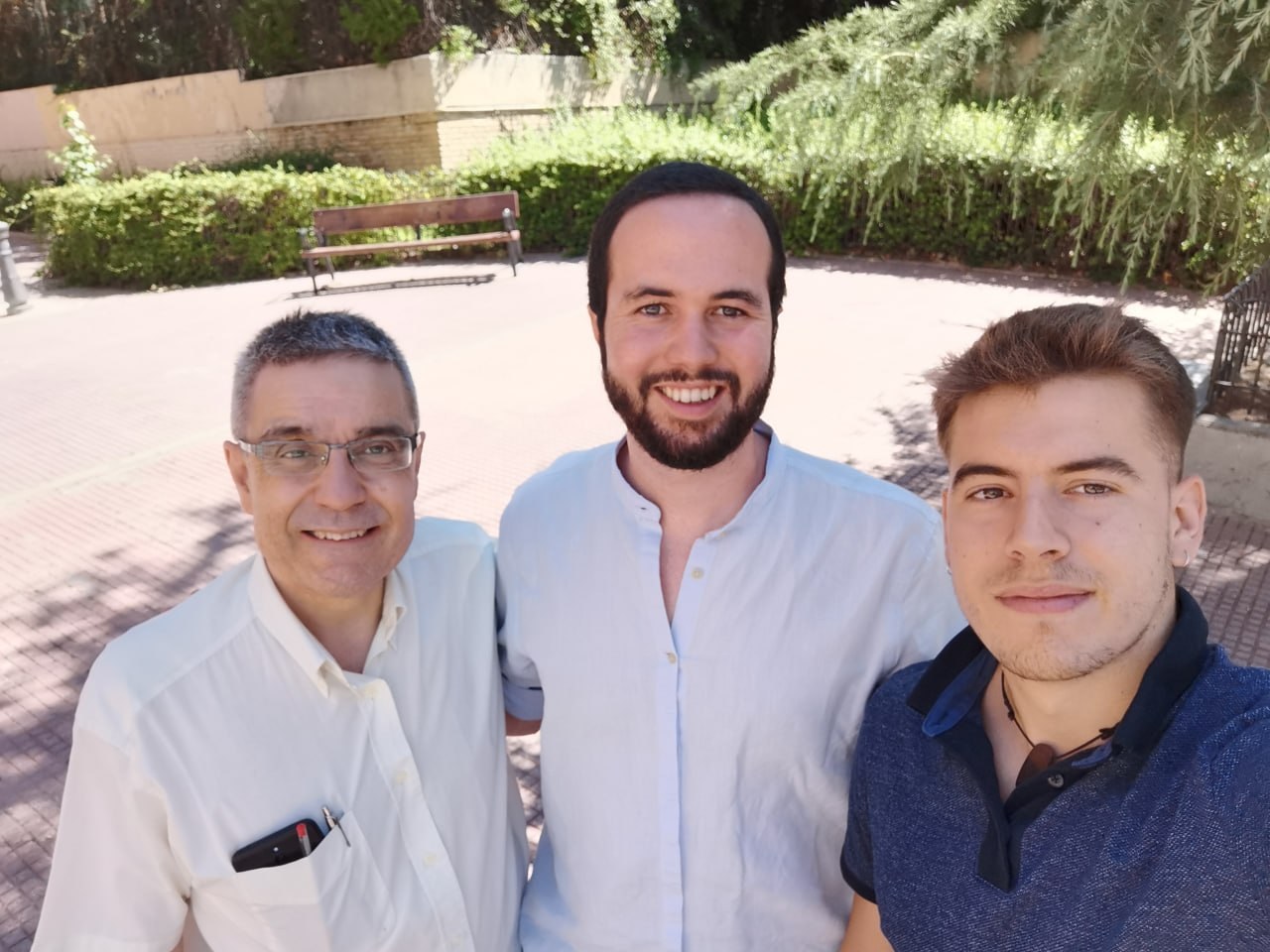
With Prof. Pedro J. Zufiria and Carlos — the people who made the Cátedra what it was while I was there.Con el Prof. Pedro J. Zufiria y Carlos — quienes hicieron de la Cátedra lo que fue en mi etapa.
🏫️ The Cátedra Cabify-UPM🏫️ La Cátedra Cabify-UPM
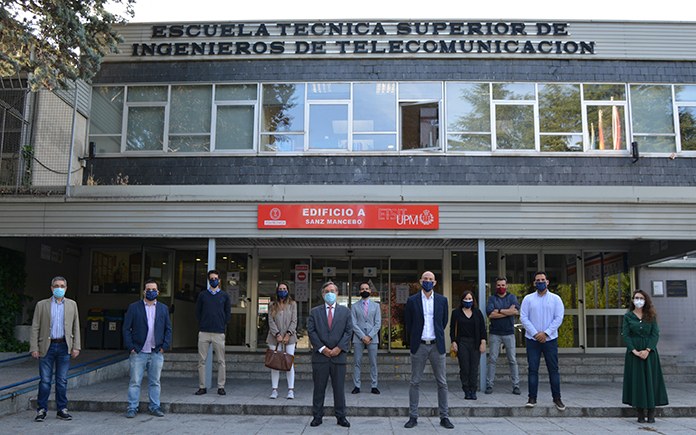
In October 2020, Cabify and ETSIT-UPM signed the agreement creating the “Cátedra de Tecnologías Inteligentes y de Ciencia de Datos para la Movilidad Sostenible” — a university-industry chair that invests up to 100,000 € per year, mainly in research scholarships for ETSIT students. It is co-directed by Prof. Pedro J. Zufiria (my thesis supervisor) and Carlos Ángel Iglesias, and it exists thanks to a very ETSIT story: Cabify was founded by alumni of the school — CEO Juan de Antonio, CFO Juan Ignacio García, CTO Carlos Herrera and others all studied there. As Cabify’s CTO put it, the company receives data from “tens of thousands of devices directly in the streets every few seconds” — exactly the kind of data my research lived on. En octubre de 2020, Cabify y la ETSIT-UPM firmaron el acuerdo que creaba la “Cátedra de Tecnologías Inteligentes y de Ciencia de Datos para la Movilidad Sostenible” — una cátedra universidad-empresa que invierte hasta 100,000 € al año, sobre todo en becas de investigación para estudiantes de la ETSIT. La codirigen el Prof. Pedro J. Zufiria (mi supervisor de tesis) y Carlos Ángel Iglesias, y existe por una historia muy ETSIT: Cabify la fundaron alumni de la escuela — el CEO Juan de Antonio, el CFO Juan Ignacio García, el CTO Carlos Herrera y otros estudiaron allí. Como dijo el CTO de Cabify, recibe datos de “decenas de miles de dispositivos directamente en las calles cada pocos segundos” — justo los datos con los que trabajé.
🎯 Areas of action🎯 Áreas de acción
The Cátedra’s research agenda spans five areas, all aimed at turning mobility data into sustainable-city decisions: La agenda de la Cátedra cubre cinco áreas, todas para convertir datos de movilidad en decisiones sostenibles:
- Data analysis for mobility — the area my own work on bus headways belonged to;Análisis de datos para la movilidad — mi área de trabajo en headways de bus;
- Sustainable mobility simulation;Sustainable mobility simulation;
- The augmented city;La ciudad aumentada
- Negotiation and auction techniques for transport economics;Negociación y subastas para la economía del transporte;
- The Sustainable Mobility Observatory — a dashboard that continuously collects sustainable-mobility news from cities and enriches it with machine-learning processes to make it easier to study and understand.The Observatorio de Movilidad Sostenible — un dashboard que recoge noticias de movilidad sostenible de las ciudades y las enriquece con procesos de machine learning para facilitar su estudio y comprensión.
On the vision behind it, Cabify’s founder and CEO Juan de Antonio said: “Being able to create knowledge, foster research and connect innovative solutions to the real mobility challenges is key to identifying high-impact opportunities.” And Félix Pérez, director of ETSIT-UPM, on the surprise of finding so many of the school’s alumni at Cabify — “from the most technical positions to those leading the business strategy” —: “it validates the training we give here and the impact we can generate from Madrid.” Sobre la visión, el fundador y CEO de Cabify dijo: “Poder crear conocimiento, fomentar la investigación y conectar soluciones innovadoras con los retos reales de la movilidad es clave para identificar oportunidades de alto impacto.” Y Félix Pérez, director de la ETSIT-UPM, sorprendido por tantos alumni de la escuela en Cabify — “desde los puestos más técnicos hasta los que lideran la estrategia de negocio” —: “valida la formación que damos aquí y el impacto que podemos generar desde Madrid.”
📸 The space📸 Espacio
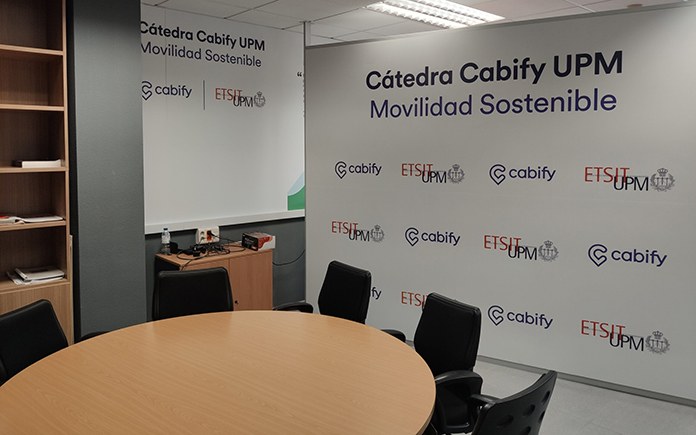
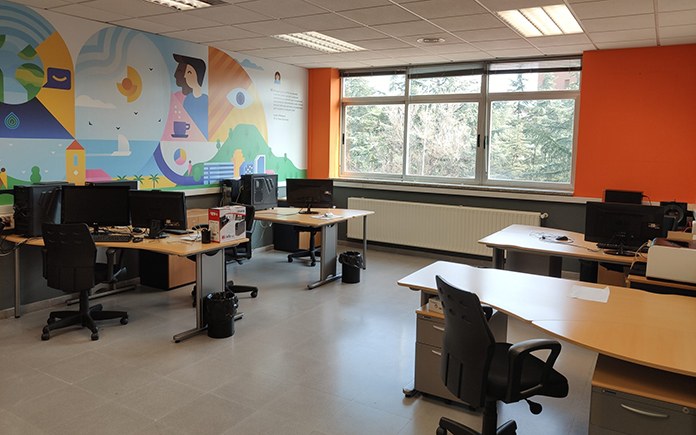
The Cátedra got a physical home inside ETSIT — an open-innovation space designed by Cabify’s own team, branded for the chair and open to the whole school community: La Cátedra tuvo su sede física en la ETSIT — un espacio de open innovation diseñado por el equipo de Cabify, con su marca y abierto a toda la comunidad:
🚌 The problem: urban buses, no telemetry🚌 El problema: autobuses sin telemetría
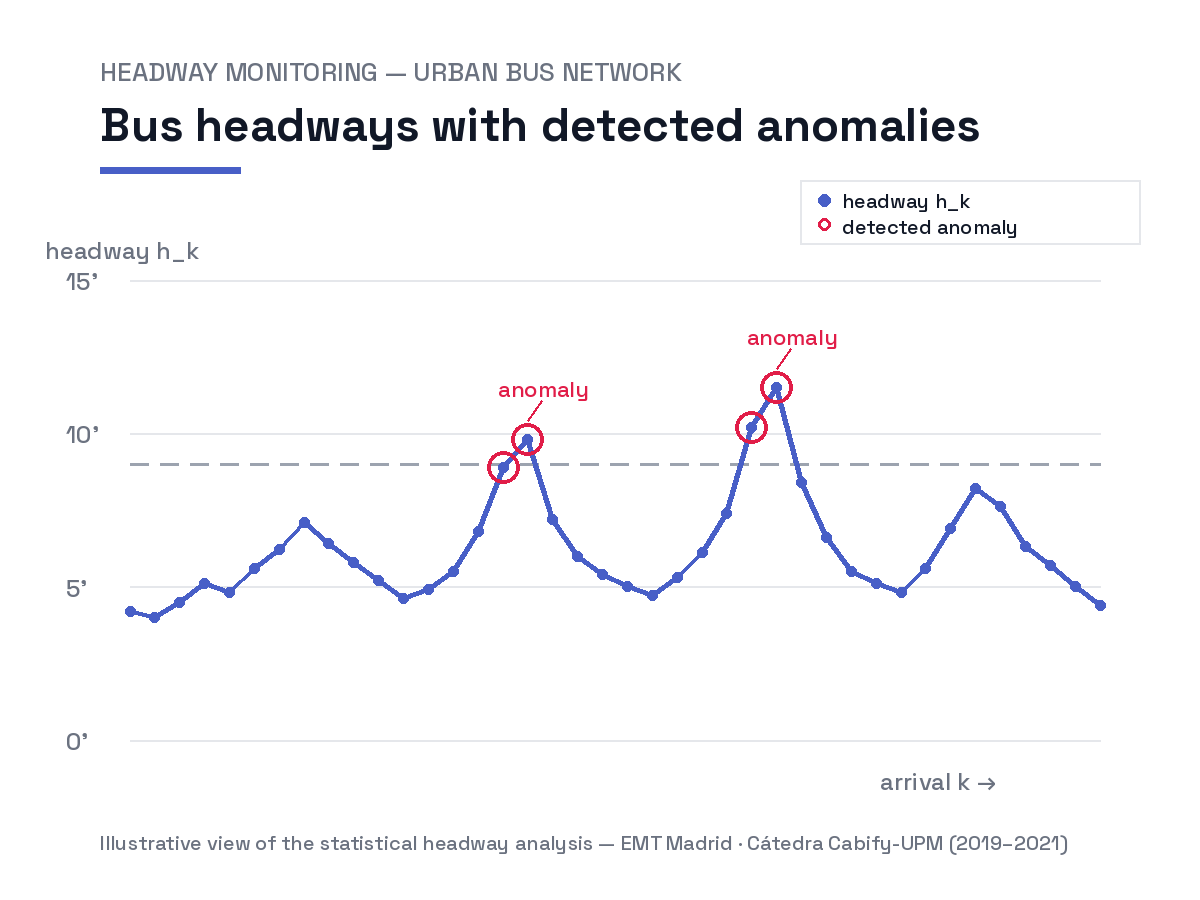
My work focused on EMT Madrid, the city’s public bus operator, using the arrival estimates that thousands of buses already broadcast — no proprietary on-board telemetry needed. The question: can we detect service anomalies in real time — breakdowns, abnormal delays, schedule drift, bus bunching — from the headways (the time gaps between consecutive buses) alone? Mi trabajo se centró en EMT Madrid, el operador público de autobuses, con las estimaciones de llegada que miles de autobuses ya emiten — sin telemetría embarcada propietaria. La pregunta: ¿podemos detectar anomalías de servicio en tiempo real — averías, retrasos, desfases y bus bunching — solo con los headways (los huecos de tiempo entre autobuses consecutivos)?
📚 Year one: the bachelor thesis📚 Año uno: la tesis de grado
The first year of the internship (October 2019 – autumn 2020) was devoted to my Bachelor’s Thesis, “Statistical Arrival Time Analysis and Anomaly Detection in the EMT Urban Buses”, supervised by Prof. Pedro J. Zufiria in collaboration with Carlos García-Mauriño. I designed an unsupervised anomaly detector on bus headways based on statistical tools — bivariate modeling of consecutive headway pairs, confidence ellipses per time-of-day slice, and threshold-based flagging — and validated it on months of Madrid data. El primer año del internship (octubre 2019 – otoño 2020) fue para mi tesis de grado, “Statistical Arrival Time Analysis and Anomaly Detection in the EMT Urban Buses”, supervisada por el Prof. Pedro J. Zufiria en colaboración con Carlos García-Mauriño. Diseñé un detector de anomalías no supervisado sobre headways de autobús con herramientas estadísticas — modelado bivariante de pares de headways, elipses de confianza por franja horaria y flagging por umbrales — y lo validé con meses de datos de Madrid.
📰 Year two: two CSCI 2020 papers and IEEE T-ITS📰 Año dos: dos papers CSCI 2020 e IEEE T-ITS
The second year built directly on the thesis and produced the publications: El segundo año partió de la tesis y produjo las publicaciones:
- “Headway Estimation in Urban Buses based on Available Arrival Time Estimators” — CSCI 2020“Headway Estimation in Urban Buses based on Available Arrival Time Estimators” — CSCI 2020
- “Bus Pass Time Estimation based on Efficient Data Gathering from a Slow Mobility Server” — CSCI 2020“Bus Pass Time Estimation based on Efficient Data Gathering from a Slow Mobility Server” — CSCI 2020
- “Bus Headways Analysis for Anomaly Detection” — IEEE Transactions on Intelligent Transportation Systems (in Early Access at the time)“Bus Headways Analysis for Anomaly Detection” — IEEE Transactions on Intelligent Transportation Systems (en Early Access entonces)
The CSCI 2020 talks were recorded and live on the Cátedra Cabify-UPM YouTube channel. The full technical story — the headway paradigm, the stochastic modeling, the London validation and the monitoring cockpit — lives in my thesis post. Las charlas de CSCI 2020 se grabaron y están en el canal de YouTube de la Cátedra Cabify-UPM. Toda la historia técnica — paradigma de headways, modelado estocástico, validación en Londres y cockpit — está en mi post de la tesis.
🎯 What the role gave me🎯 Lo que me dio el rol
- City-scale data: processing and modeling arrival streams from thousands of vehicles — messy, non-stationary, real.Datos a escala de ciudad: procesar y modelar flujos de llegadas de miles de vehículos — caóticos, reales.
- Statistical rigor for production: turning unsupervised statistical methods into something an operations team could actually act on.Rigor estadístico para producción: convertir métodos estadísticos no supervisados en algo accionable por un equipo de operaciones.
- Publishing from industry: two conference papers and a journal paper written while working — deadlines, reviews and all.Publicar desde la industria: dos conference papers y un journal paper mientras trabajaba — deadlines, reviews y todo.
- The academia–industry bridge: watching a chair like Cátedra Cabify-UPM connect a university, a company and its alumni — the model I now appreciate even more from the research side.El puente academia–industria: ver a una cátedra como la Cátedra Cabify-UPM conectar universidad, empresa y alumni — el modelo que aprecio aún más desde el lado de la investigación.
Cátedra Cabify-UPM YouTube ChannelYouTube Channel Cabify GitHub CSCI 2020 · Headway Estimation CSCI 2020 · Bus Pass Time Data Science · Madrid · 2019–2021Data Science · Madrid · 2019–2021 Innovaspain articleInnovaspain article